Amnesty / Aravind Adiga / 2020
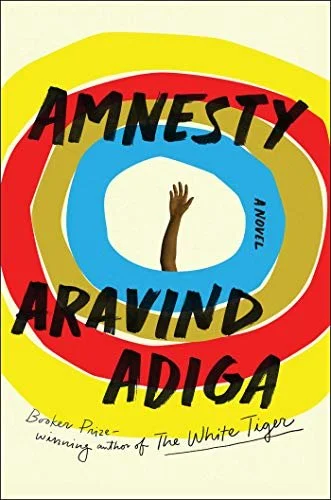
Amnesty tells the story of an undocumented Sri Lankan housecleaner in Australia who becomes privy to compromising details about a local murder. I picked up the book not just for its juicy premise, but curious as to its potential as a piece of global undocumented literature. Most of the literature about undocumented people or by undocumented writers I am aware of is written from within the United States, shaped by that country’s politics and discourse. I was curious in what the conversation was shaped like elsewhere and, as I still haven’t given up my dream of eventually teaching an undocumented lit course, I wanted to see if it would be a good fit for that course.
Despite its juicy premise, Amnesty struggles to tell its story in a way that feels urgent or gripping. Its narrative detail and characterization are generally fine, but for a book putting itself in the middle of a fraught sociopolitical issue, it narrates the rhetoric around immigration clumsily. Undocumented folks are referred to as “illegal,” some aspects of the text seem to attempt to strike neutrality, while others display the racism of the system and culture bluntly. It was hard to tell what was at stake for the narrator, besides a quaint, philosophical challenge about a hot topic.Throughout, Danny’s condition is treated like his primary conflict, and where the text could have chosen to focus more on his interior longings, we instead get a very lopsided story arc. The lopsided-ness is crucial to creating a sense of suspense in the narrative, because otherwise, there would be no mystery in the murder. Adiga seems to think hiding details and sharing them later would build a sense of urgency or mystery, but it does not. It just gave this reader a sense of confusion and at times boredom.
That said, the writer is clean enough that this book might be worth including in a course, specifically to talk about the way writing by undocumented and documented writers about migration differs and introduce students to an undocumented condition in a different context. I would hardly recommend the book to anyone though. 2.5/5.