Viewing entries tagged
Central American

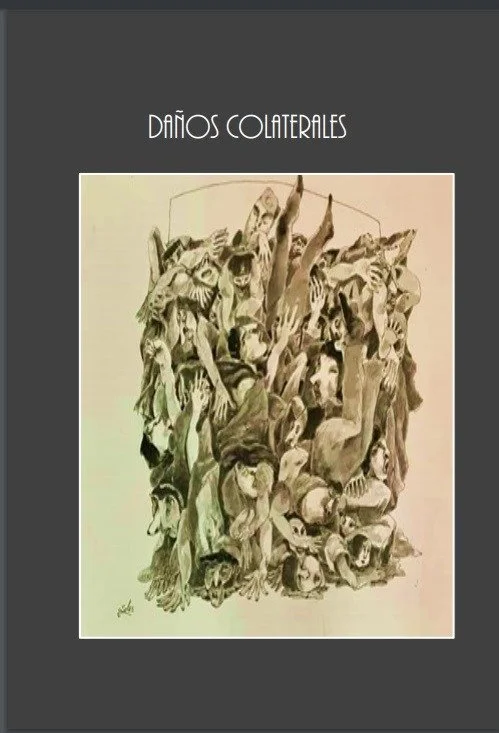
Daños Colaterales / 2025 / De León Granados, Derlin (Compilador) Hernández, Pereira, José Ricardo (Compilador) Rauda, Llich (Compilador) Gonzáles Márquez, Oscar (Compilador)

Daños Colaterales reads like holocaust fiction. The heavy handedness of some of its cruelty would be unimaginative if it wasn’t honest. Its inhumanity is made bearable by the genius and compassion of its writers. A rogue smile flashes on my face whenever I read the ending of “How To Play” by Antonio Cruz, wherein children negotiate a game of cops and robbers with the rules of the State of the Exception. It ends with children articulating an abolitionist vision: the game is only won when there are no more cops, no more presidents, no more robbers, and only civilians. The civilians tell the rest of the characters that they better start running. The authors in the anthology here don’t rely on strictly realist narratives. In “A Quick and Effective Solution,” David HP employs a slick parable. In “Flashback Arrests,” Walter Melendez takes us on a spin through the multiverse, tearing past the fabric of time to highlight the absurdity and the spiritual costs of the State of Exception, all rendered in exceptionally gorgeous prose. When the writers do explore realist depictions, many do it through captivating personas, such as that of an envious woman who sent in a false report on one of her competitors or that of a group of professional mourners who attend funerals on a daily. The writers in this collection are risking their freedom and safety in speaking out. I was consistently impressed by both their craft and bravery in this necessary collection.
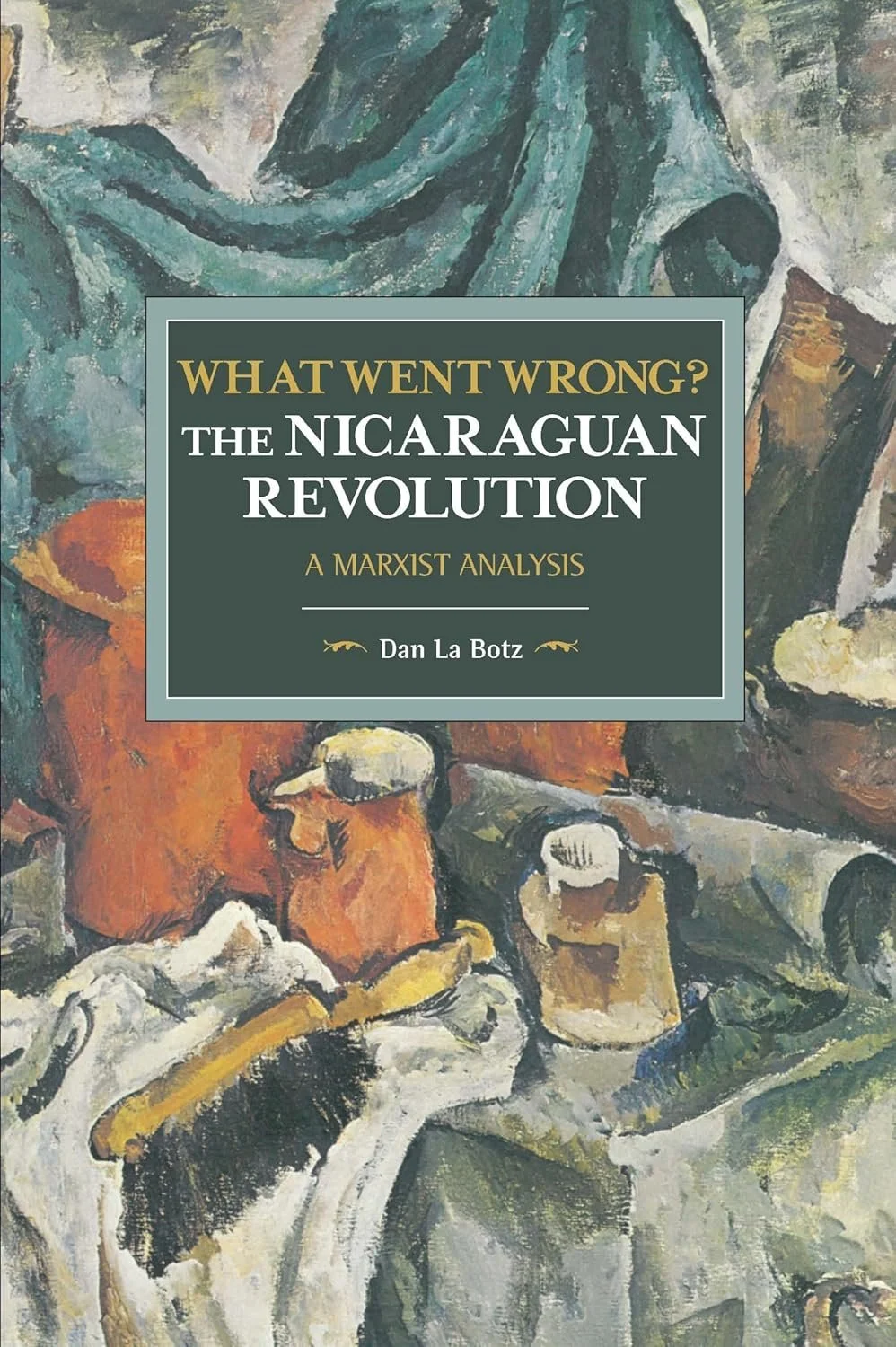
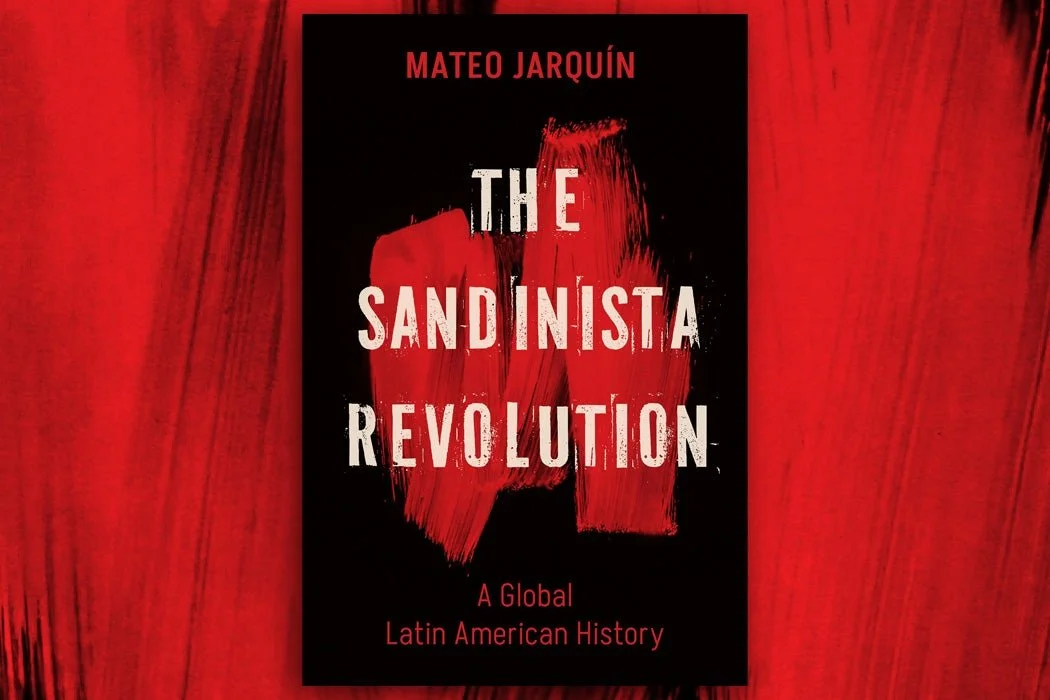
Double Book Review: What went wrong? The Nicaraguan Revolution: A Marxist Analysis / Dan La Botz / 2018 and The Sandinista Revolution: A Global Latin American History / Mateo Jarquin / 2024 

What went wrong? The Nicaraguan Revolution: A Marxist Analysis / Dan La Botz / 2018 and The Sandinista Revolution: A Global Latin American History / Mateo Jarquin / 2024 

Reading both of these histories side by side was incredibly illuminating. 

La Botz provided a wide-ranging overview, all the way from the independence movement forward. Readers get to read about filibuster William Walker, Sandino’s resistance, the Somoza regime, the original Sandinista regime, the neoliberal period led by Chamorro, then finally the Ortega regime. Although he’s occasionally old-timey in a weird white way, such as referring to indigenous people as “Indians,” he’s otherwise extremely astute on the hard facts and social dynamics. He diagnoses weaknesses and strengths in the organization structure of the top-down Marxist Leninist leadership, which failed to account for democratic processes. He then notes how this weakness led the state to exacerbate the conditions of a civil war, when it disappointed indigenous and peasant communities it claimed to represent, people who literally fought alongside the Sandinistas during the revolution. It had a great breakdown on the successes and failures of the literacy campaign, for example, that both lifted the country out of illiteracy and felt like a colonizing campaign for many indigenous communities. The last two sections of the book, both Chamarro’s victory (partially through US intervention) and Ortega’s rise. Chamarro’s and Ortega’s betrayal of the revolution are staggering to read, especially Ortega’s. This book definitely clarified the terrain for me, especially because there are Ortega apologists and tankies on the left who still celebrate Ortega’s dictatorship, despite its deep compromises with capitalists and its betrayal of basic human rights and progressive values. 

Jarquin’s book, on the other hand, is written with more fire and focus, narrowing its attention to the Sandinista revolution itself, capturing the zeitgeist and delineating the diplomatic efforts that enabled and ended the revolution. Jarquin’s great argument is that reductionist Cold War analyses of the Sandinistas fail to account for the bold statesmanship of several Latin American countries to defy the US’s will to take down Somoza and later end the war without totally annihilating the Sandinistas. In Jarquin’s book, you’ll get the excerpts from Gabriel Garcia Marquez’s Nobel Laureate speech and other cultural contexts that will make you feel the heat of the situation. 

I give both books 5/5 and consider them some of my most important reads in 2025. My degree in Latin American studies really should’ve made me learn more about the Sandinistas. Up until recently, I didn’t realize how pivotal it was to understand Central America as a region in order to understand the countries individually. You cannot understand the political conditions of the Salvadoran Civil War without understanding the Sandinistas. 

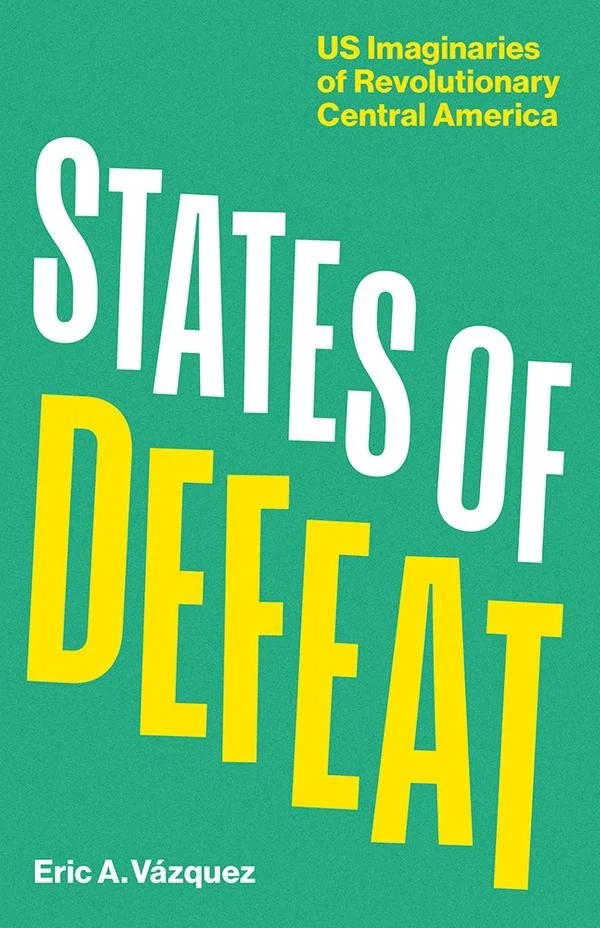
States of Defeat / Eric Vázquez / 2025

States of Defeat / Eric Vázquez / 2025

In States of Defeat, Vázquez skillfully tours the reader through post-war Central American literature, all of which imagined themselves in solidarity with its leftist struggles, and discusses how different authors and actors dealt with the difficult questions of solidarity. The selection of materials is astute, capturing a range of authors who really did a shit job, such as David Stoll and his destructive critique of Rigoberta Menchu, and those who wrestled with the legacy of the revolutionary movements with nuance, like Roxanne Dunbar-Ortiz. Vázquez’s takes are spot on and insightful. States of Defeat is extremely readable as an academic book. Vázquez writes with incredible verve. Taken as a whole, the chapters provide a great breadth of ground for people looking to explore how others have handled the challenge of leading solidarity movements. 5/5 


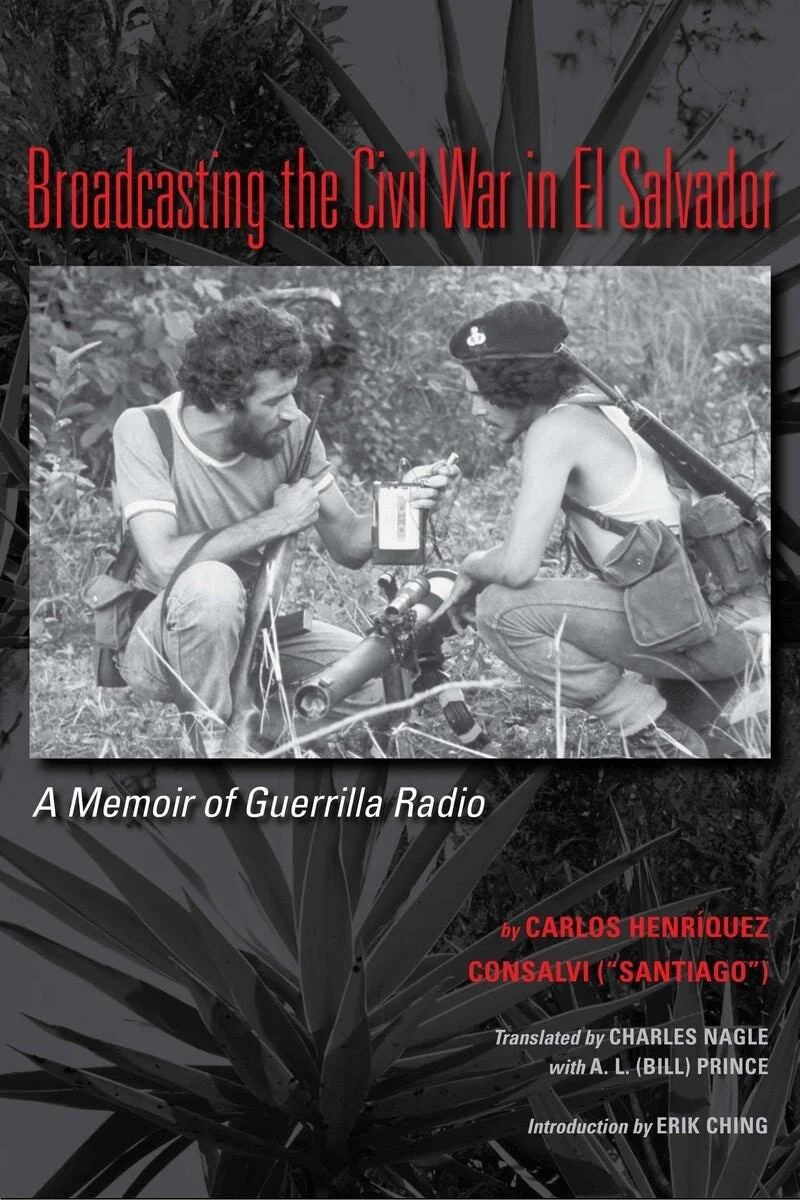
Broadcasting The Civil War in El Salvador / Santiago / 2010

Broadcasting The Civil War in El Salvador / Santiago / 2010

I started to read this in grad school, but like Miguel Marmol, I got distracted and finally returned to it this year. It’s an absolutely incredible memoir that recreates the lost diary of Santiago during the rise of Radio Venceremos. The diary was lost after a military attack, and Santiago was so distraught that his comrades agreed to help him reconstruct it. Narratively, the work is incredible, not only giving readers a glimpse of the drama of the war, battle after battle, but also tracking how the guerrilla nurtured their humanity, love, and joy throughout the process. The meat of the project is a 5/5. 
That said, I was surprised by epilogues that celebrate the end of the war, heralding it as a win, despite the less than ideal circumstances that prompted the new era of neoliberal democratization. This makes it seem like the guerrilla was fighting for democracy and not for social and economic justice. On one hand, I understand the need to present the peace accords as a viable pathway forward and the need to put aside the bitterness with your best foot forward. The FMLN didn’t have a pathway to win the war, so they had to bend to what they could achieve. It just reads poorly knowing all that was to come. 

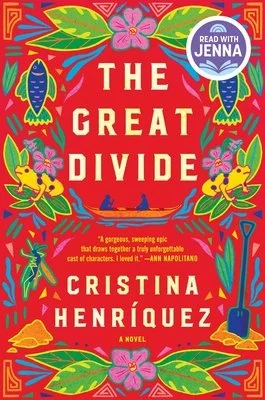
The Great Divide / Cristina Henriquez / 2024

The Great Divide / Cristina Henriquez / 2024

The Great Divide is a sweeping novel on the building of the Panama Canal. It tracks a fisherman and his estranged son who is building the canal against his wishes, a woman fighting against the displacement of her community, a Yankee doctor fighting malaria and the adolescent from Barbados who works as his help, as well as a slave driving Yankee working men to death in the canal. The novel opens gently and builds steadily. Before you know it, you’re enrapt in the drama of characters' lives, surprised by their various connections, and all under the steady hand of the author, who writes with a very clean craft that follows the rules of the genre without stifling any of the magic or inspiration. I read the book as a way of learning more about Central American history while touching grass instead of reading yet another lost in the sauce history book. It fulfilled that purpose and then some. 4.5/5 

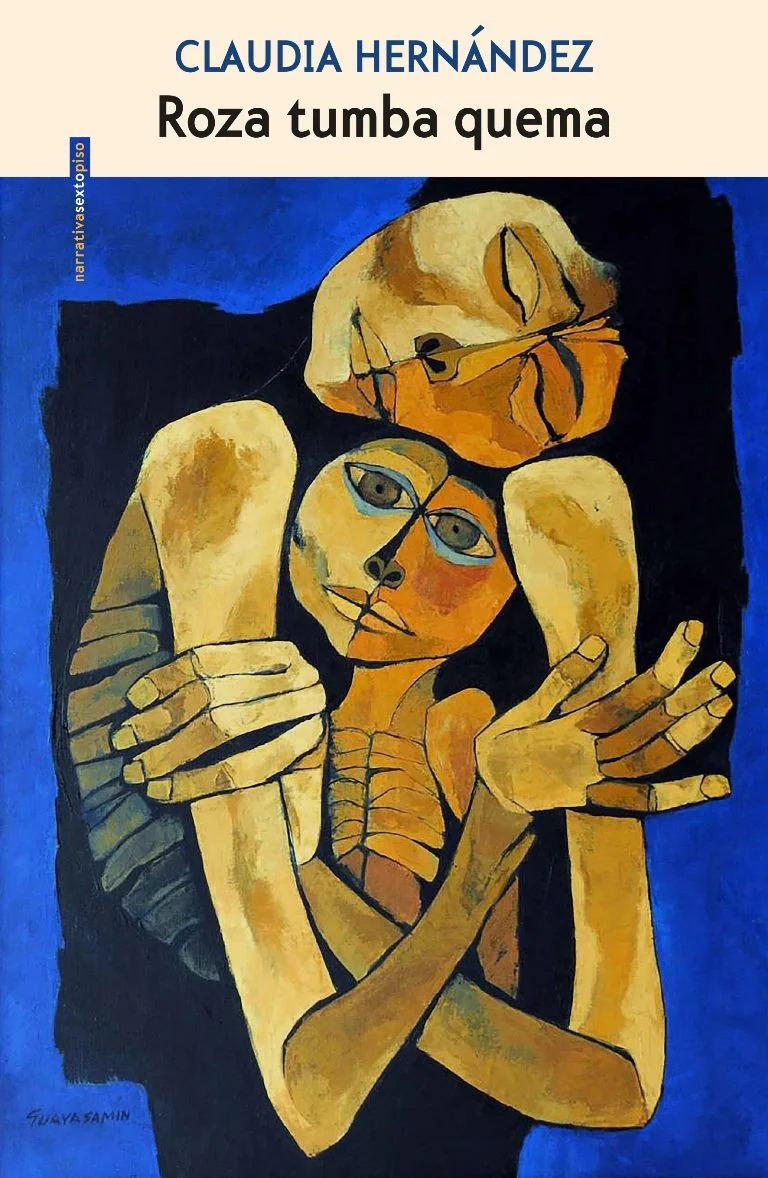
Roza tumba quema / Claudia Hernandez / 2018

Roza tumba quema / Claudia Hernandez / 2018

With Roza tumba quema and El Verbo J under her belt, Hernandez is perhaps the Salvadoran novelist who has best captured the pain and aftermath of the Salvadoran Civil War. Roza tumba quema follows a woman, criss-crossing through different eras of her life: as a guerrillera, as a mother fundraising for her daughter’s education, as a mother searching for her long lost daughter, and more. It is told in the dizzying narrative style of Hernandez which forces readers to reconstruct the context as she reads. I trust-fell into the style, sometimes losing track of who I was reading about when, but piecing it together, and the painful attention this takes, does something to the sentiment. Hernandez likes to leave readers unsteady, perhaps to avoid an easy sentimentalization, perhaps to give them a taste of the distress her characters face. In either case, it does little to hamper my sense of awe, gratitude, and desire to reflect over the lifetime Hernandez covers in this work. She writes the novels many others wished they were capable of writing with such finesse and grace. That is, novels that tell the story of an entire people, an era, with urgency and insights that resists simplistic readings of history. 5/5


Sentado a revés / Vladimir Amaya / 2019

Sentado a revés / Vladimir Amaya / 2019

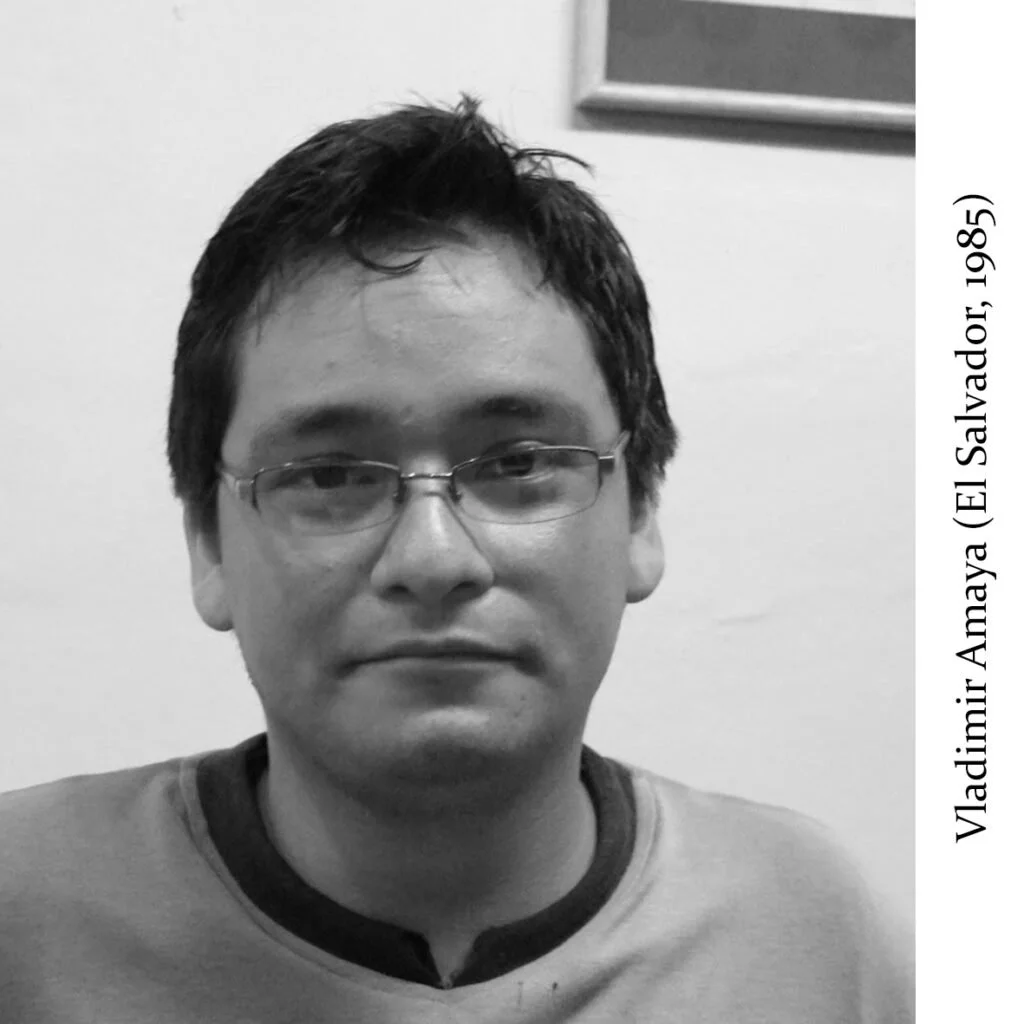
Vladimir Amaya is a legend in Salvadoran circles, and this short chapbook dramatically illustrates why. Amaya’s work carries the same spirit of what some call la generacion de la sangre, or the Bloody Generation. These writers obsess over the violence and blood spilt in the streets, and I’d include writers like Moz, Sol Quetzali, and Miroslava Rosales as some of their most potent writers. Here, we get the shit imagery reminiscent of Rosales’ work in poems like “Mi patria se respite en los excrementos.” Overall, his work is some of the best in this heavy vein. 4 out of 5. 

Cipota / Chelsea Guevara / 2025

Cipota / Chelsea Guevara / 2025
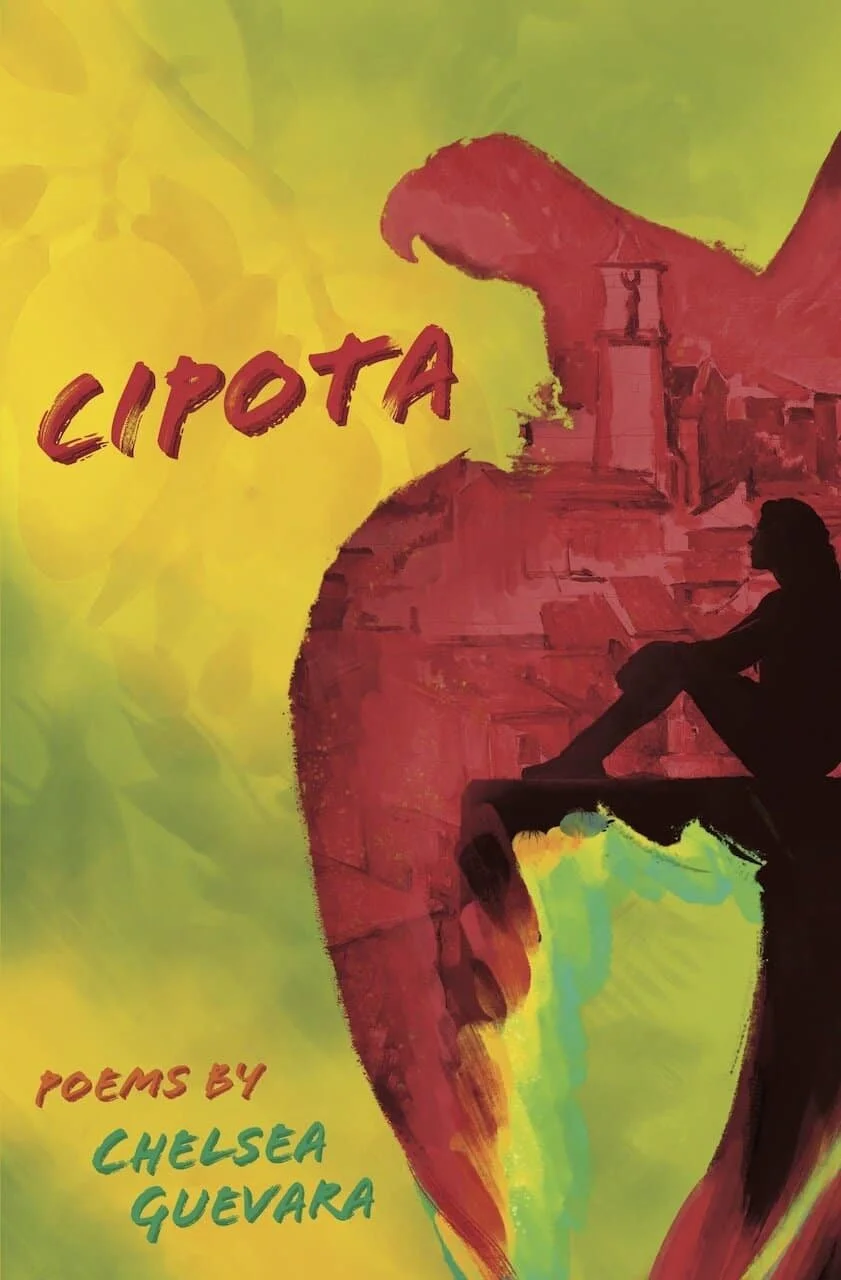
There is an undeniable verve in this collection, which is a coming-of-age story of a young Central American woman as she tries to recuperate her identity as a Salvadoran and recover from the losses brought about by migration, war, and perhaps most personally for the author, divorce. Guevara successfully articulates her ethic and hopes in a passionate, poignant lyric that will break your diasporic heart. The collection is young, but it’s named Cipota for a reason. I love it for the ways it reminds me of the most beautiful younger versions of myself, of many of my Central American peers.

Me llamo Rigoberta Menchú y así me nació la conciencia / Elizabeth Burgos / 1983

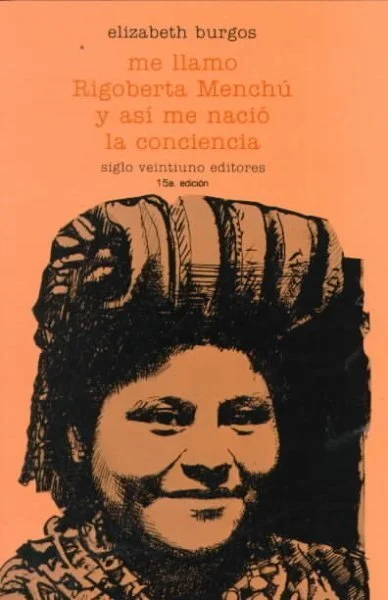
An extraordinarily compelling testimonio on the lives of Maya campesinos, Rigoberta Menchu’s story hit me en las madres. The testimonio includes interesting details about specific cultural practices, like marriage and birth rites, and beliefs, such as the syncretic Maya Christianity and relationship to naguales. Interestingly, here Rigoberta made clear that her community didn’t ostracize or stigmatize diverse sexual orientations and gender identities queered and oppressed in Western societies. These details as a whole provide outsiders with a bridge into Maya cosmovision and provide assimilated indigenous and mestizo readers an opportunity to reconnect to a bit of what was lost. The portions of the testimonios describing the poverty, organizing, resistance, repression, and torture were deeply moving and harrowing to read. Rigoberta’s testimonio is an invaluable part of the repressed indigenous marxist tradition I am currently reading my way through right now.  5/5

Todas las voces / Anarella Vélez / 2013

Vélez escribe sin ojo ni oreja, enfocándose en la angustia política y quizás en ganar lectores que simplemente sienten esa misma angustia. Solamente un poema (“Angeles”) me movio. Los demás no tienen suficientes imágenes o música para que sean memorables. Las traducciones de algún modo son peores que estos poemas. 1 out of 5.   

Huida Constante / Manuel Tzoc / 2016

Constante Hida / Manuel Tzoc / 2016

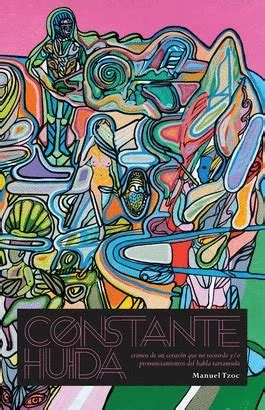
My friend brought me back Constante Huida by Manuel Tzoc back from Guatemala this past fall. I've been itching to read their work for years and was so grateful! Tzoc is a monumental queer Maya writer from Guatemala, one of the first voices you’ll have recommended to you when you ask. That said, I’m not sure if this is the collection by which to get to know Tzoc’s work. Most of the collection is a well-crafted irreverent queer ennui diatribe. While Tzoc sprinkles the collection with playful puns and eye-catching images here and there, there are one too many poems bemoaning the challenges of writing for me to understand where all the pomp was coming from. There are definitely glimpses of real pathos on the page, such as “por el día/por los días.” Either way, I’m glad to have read it and will be seeking out more of his work. 2 out 5

Seeing Indians: A Study of Race, Nation, and Power in El Salvador / Virginia Tilley / 2005

Seeing Indians: A Study of Race, Nation, and Power in El Salvador / Virginia Tilley / 2005

I’ve known about this book for years but didn’t read it, because I read a review that said something along the lines of “this white woman gets indigenous identity wrong.” I couldn’t disagree more whole-heartedly. What Seeing Indians sets out to do is explain how the racial politics of mestizaje and indigenous rights plays out in Central America, specifically El Salvador, and how global indigenous politics further marginalize El Salvador’s indigenous groups. Rather than advocating for a particular interpretation of indigenous identity, she simply gives a lay of the land, providing crucial clarity for folks trying to understand racism in El Salvador and IndoAmerica at large. Reading Seeing Indians enabled me to see clearly the apartheid in Guatemala and the racism of Guatemala and El Salvador, whereas before I would be somewhat confused and unsure if I just simply didn’t have more historical or social context for a dynamic or work of art or situation. Seeing Indians provides many leads for a young researcher to explore in their understanding of Latin America. I whole-heartedly recommend it especially for people outside of Latin America, trying to better understand the racial politics of mestizaje. 4 /5   


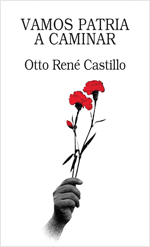
Vamos Patria a Caminar / Otto Rene Castillo / 1965

Vamos Patria a Caminar / Otto Rene Castillo / 1965

I’ve been searching for a book by Otto Rene Castillo for years, so I was thrilled when I found a copy of Vamos Patria a Caminar en La Teca during my trip to Guate. This collection is full of love and heartbreak poems, as well as patriotic, revolutionary leftist poetry. The love here blends and blurs nationalism and romantic love, a tradition familiar to anyone who has read the kundimans of the Phillipines (via Patrick Rosal esp). There’s very many 10/10 poems in this collection. Occasionally, the collection lapses into the typical snares of masculinist love poetry. The patriotic nationalism and idealism hasn’t aged well either, as the revolutionary potential of postcolonial nation-states has slowly faded into a dystopia in Africa, South Asia, and Latin America.  Still, it’s easy to see why Otto was so beloved by the revolutionary left in Central America with these passionate, pulsating poems dreaming of a better future in Guate and TLC. 4/5


Revólver/ Josué Andrés Moz / 2024

Revólver/ Josué Andrés Moz / 2024

Moz outdid himself here, his words cutting with broken hearted clarity into the political turmoil of Bukele’s Salvador.  Written in a language just as rich and calculated as his early work, Moz’s articulation of his griefs and passions find subjects worthy of its dramatic flair. With criticisms to the political buffoonery of some of his peers, as well as heartfelt poems about unfulfilled desire, Moz butts his head against the worst of our era and gives it a deserving language. 4/5 

Reimaging National Belonging: Post-Civil War El Salvador in Global Context / Robin Maria / 2014 

Reimaging National Belonging: Post-Civil War El Salvador in Global Context / Robin Maria / 2014 

A foundational text in Central American studies, RNB is an anthropologist’s take on postwar El Salvador that succinctly provides introductory political clarity. It captures the consequences of the ARENA’s years in power on education and national history, as well as the failures of justice and political accountability. I recommend this book to every undergrad and grad Salvadoran because DeLugan’s approach is the first idea many of my friends had when conceiving their research projects carried into fruition by a professional. It also provides clarity on how mestizaje has played out in a contemporary context.  4/5


After Rubén by Francisco Aragón

Foremost among the writers whose work has showed me the most about intimacy and pace is Francisco Aragón. You cannot read a Francisco Aragón poem in a rush. As someone raised on slam, hip-hop, and the beats—you know, on a verse known to Howl—I needed a writer like Aragón to teach me how to slow down and really pay attention to a moment.

After Ruben.jpg

In After Rubén, Aragón braids his careful reflections with lo-fi remixes of Rubén Darío poems. I say, lo-fi, because Aragón’s English translations of Darío poems don’t try to preserve the rhyme and rhythm that make the poems magical in Spanish, but rather frequently breaks up stanzas and even lines to make you linger on each phrase. This gives the poems an intimate, relaxed lo-fi quality. Aragón’s “Symphony in Gray,” for example, begins:

Like glass

the color of mercury

it mirrors the sky’s

sheet of zinc, the pale gray

a burnish splotched

Whereas the original poem begins with the noun “el mar,” letting you know that Darío is describing the sea, here we do not get an explicit hint of the sea, until the fifth stanza, where “leaden waves crest / collapse—seeming / to groan near the docks.” In the translation, we are too close to the object to see the whole; note the short lines, really breaking each image down piece by piece. The effect is to create an almost hyper-real version of the original, which in this case compliments the intent of the original: to draw the reader through hypnotic shades of gray.

The collection generously includes the Spanish versions of Darío’s work in the back of the book, allowing word nerds to flip between the English and Spanish versions and savor the different nuances between form and diction, as well as a non-fiction essay discussing his relationship to Darío’s work. In the essay, Aragón explains how his mother and father had, despite their limited education, memorized Darío poems from their schooling in Central America, which they cherished and passed down to Aragón. This collection is Aragón’s way of preserving Darío’s work for another generation of Latinx writers and re-introducing him to the English canon. While I have known about Darío from my forays into Spanish literature, I deeply appreciate Aragón’s ability to take his dramatic, virtuosic voice and make it seem down-to-earth and plainspoken. Aragón has offered me a completely new window into his work.

Aragón’s own work doesn’t play second fiddle to Darío’s in this collection, either. Rather, Aragón carefully sets Darío up as a queer Central American elder and by the end of the collection, the relationship between them feels spiritual. Darío and Aragón strengthen one another in this collection. Whereas Aragón mines aspects of Darío’s life, line, and legend to speak to the present, he also uses his own openness about his queerness to open up this once silenced aspect of Darío’s life and work. In “Winter Hours”/”De Invierno,” Aragón transforms an image of Carolina into an image of Amado, and in “I Pursue a Shape”/”Yo Persigo Una Forma…”, Aragón transforms an image of Venus de Milo into an image of the David. Darío was closeted during his lifetime. As Aragón writes in an essay in Glow of Our Sweat, he himself was once shy about his sexual orientation, but has moved towards highlighting and being open about his queerness as a way of denouncing homophobia. These on-and-off-the-page moves on Aragón’s part are acts of inter-generational healing, creating a path for future queer artists of color to authentically present themselves to the world and define themselves on their own terms.

Lets put it another way: In my favorite poem in the collection, “Nicaragua in a Voice,” Aragón writes,

More than the poems

—the fruits that sang

their juices; dolls, feverish,

dreaming of nights,

city streets—for me it was

the idle chat between the poems:

cordial, intimate almost…

like a river’s murmur

as if a place—León,

Granada—could speak,

whistle inhabit

a timbre… as if, closing

my eyes, I had it again

once more within reach:

his voice—my father

unwell, won’t speak.

In After Rubén, Aragón finds a way to retrace many voices that were once crushed, once silenced, whether they belong to his father or one of the greatest Latin American poets in millennia. And that is a reward worth “more than the poems.”