Viewing entries tagged
Poetry

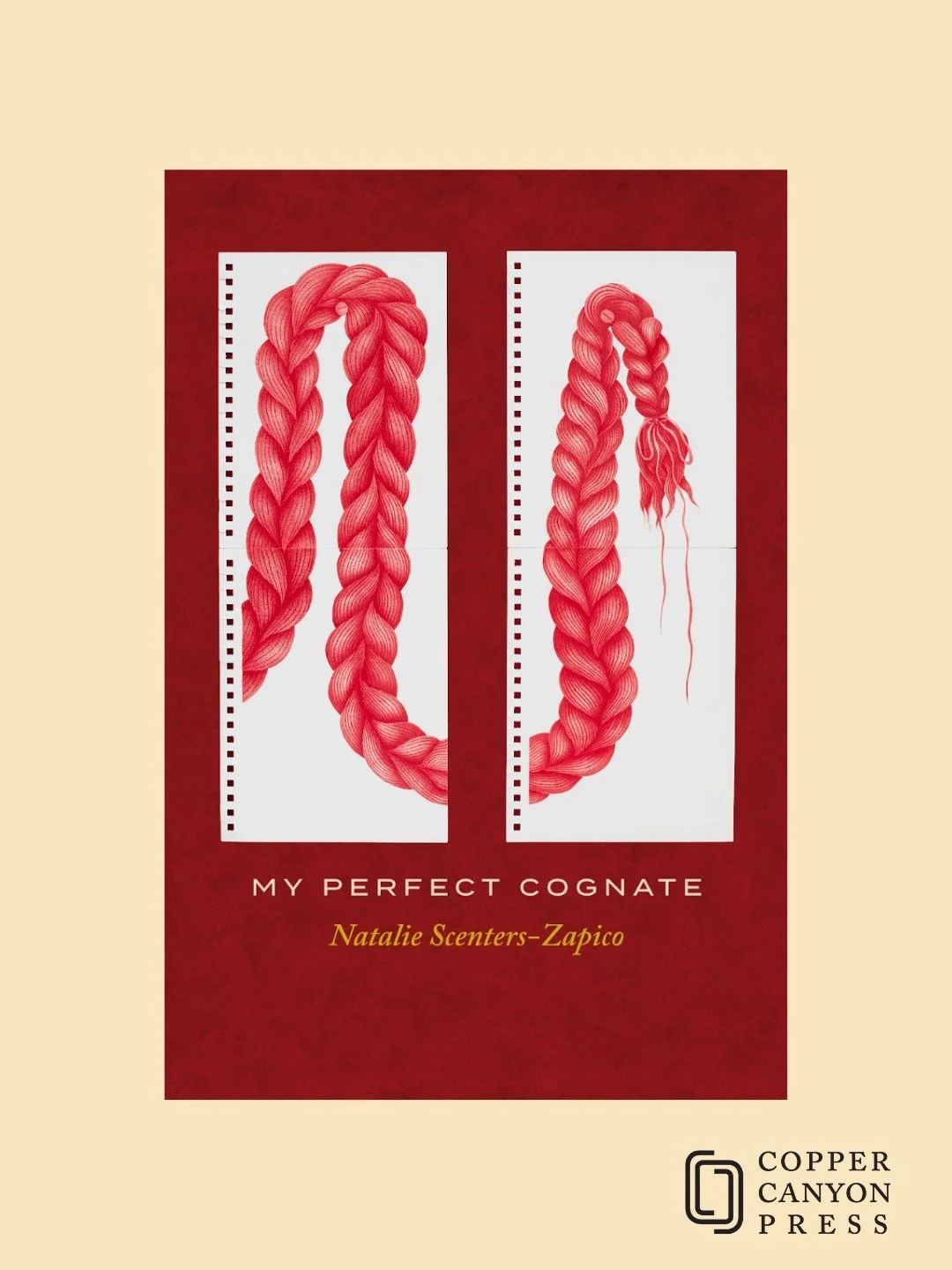
My Perfect Cognate / Natalie Scenters-Zapico / 2025

My Perfect Cognate / Natalie Scenters-Zapico / 2025

Natalie remains one of my favorite poets for the way she spits her grief with grit. Here, we get a slough of poems processing post-partem depression and the pain of a miscarriage braided into the language by exploring the intimacy and distance between false and true cognates in Spanish and English. Each poem gets mirrored, however, slanted in its translation. It makes for intellectually stimulating poems in English and Spanish where the subtleties of meanings get spun through cognates. This is an innovative form I’ve seen nowhere before, and I tip my hat to Natalie for once again finding new formal ground and most of all for having the nerve to GO THERE in terms of content. 4.5/5 

Sentado a revés / Vladimir Amaya / 2019

Sentado a revés / Vladimir Amaya / 2019

Vladimir Amaya is a legend in Salvadoran circles, and this short chapbook dramatically illustrates why. Amaya’s work carries the same spirit of what some call la generacion de la sangre, or the Bloody Generation. These writers obsess over the violence and blood spilt in the streets, and I’d include writers like Moz, Sol Quetzali, and Miroslava Rosales as some of their most potent writers. Here, we get the shit imagery reminiscent of Rosales’ work in poems like “Mi patria se respite en los excrementos.” Overall, his work is some of the best in this heavy vein. 4 out of 5. 

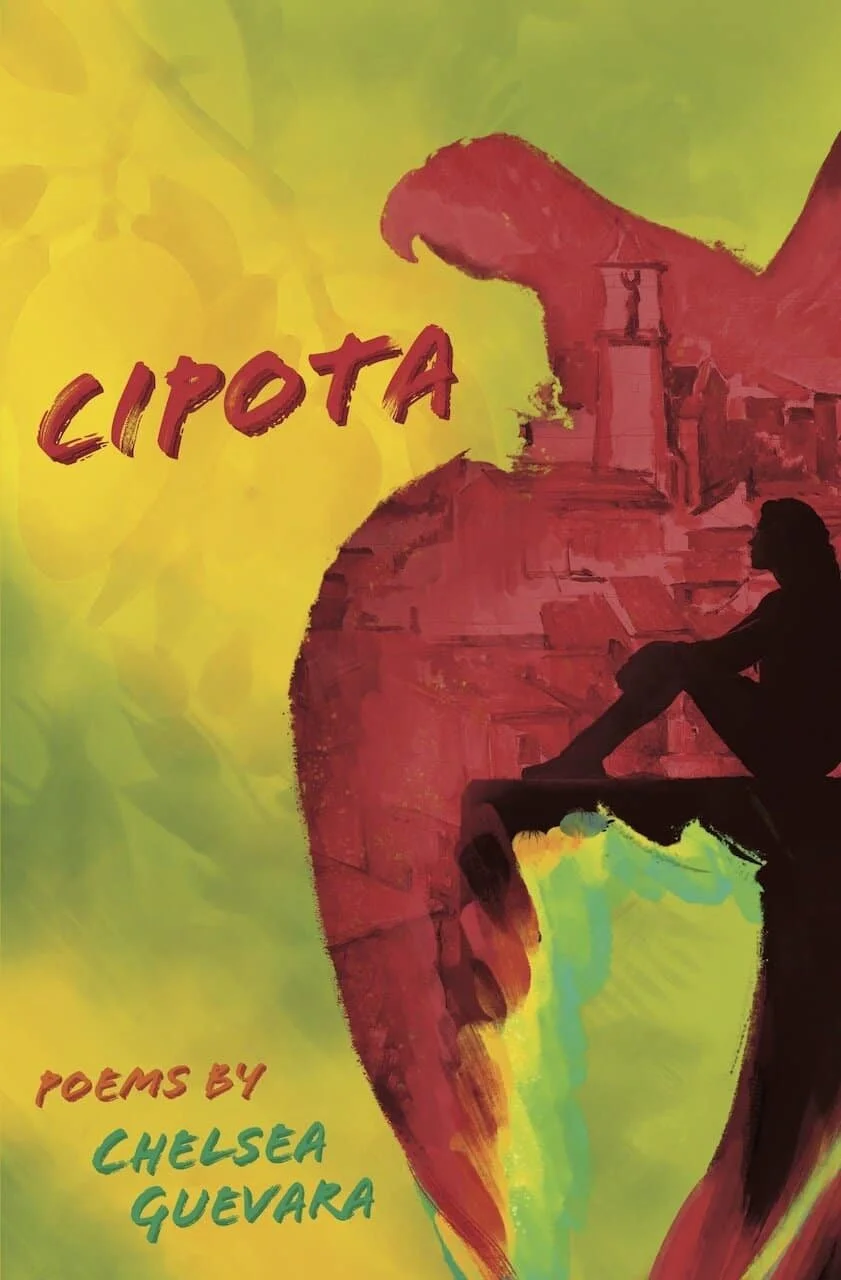
Cipota / Chelsea Guevara / 2025

Cipota / Chelsea Guevara / 2025
There is an undeniable verve in this collection, which is a coming-of-age story of a young Central American woman as she tries to recuperate her identity as a Salvadoran and recover from the losses brought about by migration, war, and perhaps most personally for the author, divorce. Guevara successfully articulates her ethic and hopes in a passionate, poignant lyric that will break your diasporic heart. The collection is young, but it’s named Cipota for a reason. I love it for the ways it reminds me of the most beautiful younger versions of myself, of many of my Central American peers.

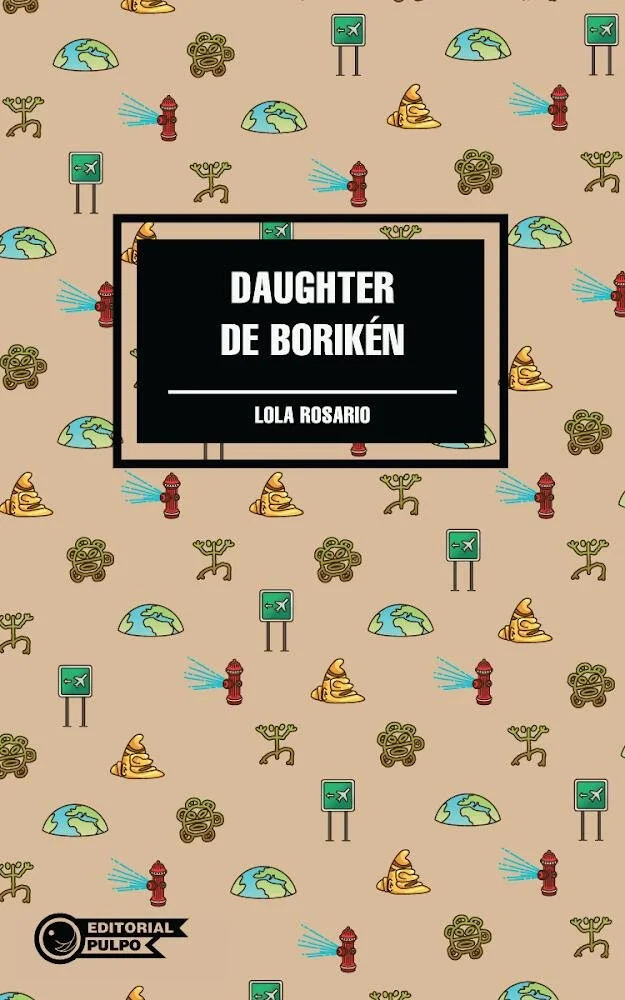
Daughter de Boriken / Lola Rosario / 2024 

Daughter de Boriken / Lola Rosario / 2024 

In Daughter de Boriken, Rosario bounces between nationalist pride and identity struggles. Hailing from Nueva Yol, she does her mandatory nods to the Nuyorican and low-income living. She rather pointedly rejects the Nuyorican identity for herself in “When I was Nuyorican,” a confusing move. In the following poem “Boricua Soy,” she doubles down, even when facing the criticism of a Boricua elder who insists she’ll never be Boricua. These tensions reflect commonplace struggles in identity development, and elsewhere she celebrates and laments her tongue, takes joy in la isla and the food, as expected of diaspora lit. One surprising feature is the author’s wealth. Apparently, she has the money to travel all over the world before realizing she needed to settle in Boricua in her 50s. The spoken word here is sensuous and playful, but a greater aesthetic or political vision would help ground the writing.

La Bodega Sold Me Dreams and Other Poems / Miguel Piñero / 1985

La Bodega Sold Dreams and Unpublished Poems / Miguel Piñero / 1985

Miguel Piñero was one of my favorite poets in undergrad. My writing sample for my graduate school applications was an essay I wrote comparing and contrasting “A Lower East Side Poem” with Javier Zamora’s “Instructions for my funeral.” I was eager to read LBSD to see how well his other work stood up to selected poems I had access to then, and to see whether I would even still connect to the poems in the same way. LBSD did not disappoint. Even unpublished poems like “Obreras” bring a vision and muscle I find lacking in so much contemporary work. “The Book of Genesis According to St. Miguelito” make clear a political vision in a fiery and funny way most contemporary slam poets could never. 5/5  

Tropical Town and Other Poems / Salomon de la Selva / 1918

Published in 1918, Salomon de la Selva may be the first Latino poet published in the US and is certainly one of the first Latino authors published in the US--period. Though Nicaraguan-born, he was US-trained and thus learned to navigate--and found moderate success--in both the yanqui and Latin American literary scene. Stylistically, his verse reads like his romantic contemporaries, which means he feels like a Longfellow knockoff. Topically, he occasionally bares his teeth, discussing his homeland from an overtly political perspective. Contemporary readers may find even these poems hampered by the style and inconsistent politics. He occasionally longs for white girls--whomst amongst us has not? According to this collection, his deepest darkest secret is that he once made love to a tree, surely and hopefully in the romantic sense and not the pornographic. I recommend this book to those with a historical interest in Latino authors and Central America, but few others. 2 out of 5. 

Todas las voces / Anarella Vélez / 2013

Vélez escribe sin ojo ni oreja, enfocándose en la angustia política y quizás en ganar lectores que simplemente sienten esa misma angustia. Solamente un poema (“Angeles”) me movio. Los demás no tienen suficientes imágenes o música para que sean memorables. Las traducciones de algún modo son peores que estos poemas. 1 out of 5.   

Shake Loose My Skin / Sonia Sanchez / 1999

In 2024, does your house have lions by Sonia Sanchez was one of my favorite reads. Shake Loose Your Skin is my first deep dive into Sanchez’s work and it provided a curious snapshot into her legend. does your house have lions? is likely the apex of her career, as she has only published one book after this new and selected, and the poems from dyhhl were by far was the best part of the new and selected. In content, many of the poems and essays in this collection grapple with gendered violence and surviving toxic masculinity in intimate relationships. Sanchez details the pain of adultery and addiction repeatedly in a confessional and heartbreaking voice with little literary stunting. Reading Shake Loose Your Skin made me feel the same way I did after catching up with a homegirl after far too long and too much has happened. I was pleasantly surprised to find a long poem dedicated to Tupac Shakur. Giovanni had a poem for Tupac too and it makes me happy knowing all the dope Black women were writing poems for him. The poems carry a natural musicality, relying on the rhythms of AAV, rather than stringent form or other phonetic flexes. While many poems are obviously meant to be sung or spoken aloud, they are still rendered on the page with a subtly that rewards close readings for deceptively smooth line breaks and evolution of arguments. 3 out of 5. 

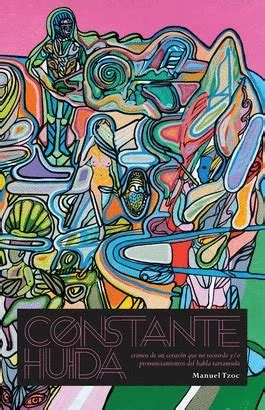
Huida Constante / Manuel Tzoc / 2016

Constante Hida / Manuel Tzoc / 2016

My friend brought me back Constante Huida by Manuel Tzoc back from Guatemala this past fall. I've been itching to read their work for years and was so grateful! Tzoc is a monumental queer Maya writer from Guatemala, one of the first voices you’ll have recommended to you when you ask. That said, I’m not sure if this is the collection by which to get to know Tzoc’s work. Most of the collection is a well-crafted irreverent queer ennui diatribe. While Tzoc sprinkles the collection with playful puns and eye-catching images here and there, there are one too many poems bemoaning the challenges of writing for me to understand where all the pomp was coming from. There are definitely glimpses of real pathos on the page, such as “por el día/por los días.” Either way, I’m glad to have read it and will be seeking out more of his work. 2 out 5

[...] / Fady Joudah / 2024

[...] / Fady Joudah / 2024

I would highly recommend reading […] in a book club or group. Being a Palestinian writer in 2024 means the genocide and your familiar struggles being thrust into the spotlight like never before, alongside all the political baggage and expectations that come with such a moment. Here, Joudah resists becoming a sole spokesperson, someone who sentimentalizes or serves as a catalyst for catharsis. Inevitably, this has created a collection that can be hard to parse on your own at times. There’s a resistance in the silences here, in the naming of so many poems as […] in a way that makes some of the poems harder to remember, much in the same way the onslaught of death and the faces and the dismembered body parts on our screen become lost to actual memory. It was reading these poems in conversation with peers that really made their brilliance shine through for me. i had the blessing of having a Palestinian woman in the room during my book club who could speak to how certain poems evoke a specific set of war memories for her. I particularly adored the maqams in this collection. I recommend folks to listen to Joudah read “Dedication”—what I would argue is the most “accessible” poem in the collection and the sort of poem people expected and wanted from Palestinian poets this year. Joudah reads it with a rhythm and energy practically foreign to the loud, slammy US circuit for poems like these. 4.5/5

Bluff / Danez Smith / 2024

Bluff / Danez Smith / 2024

Danez Smith been one of my favorite poets. In Bluff, they reflect on their meteoric rise and the tokenism that they tried and feels they failed to resist. In some of their best poems yet, they criticize the “hope industrial complex” and feel embarrassed about having written poems for presidents. I laughed out loud at the line “they untapped my phone / found no threat, the shame i felt.” Despite this, Electric Literature still insists Smith “Sculpts Pessimism into Hope”, which isn’t exactly wrong but feels like it misses the critique, as if readers can’t stomach the Afropessimism intrinsic in the project. I can’t say I’m well-read in Afro-pessimism, but as a neophyte to Marxism, I did feel disappointed in Smith’s inability to articulate much of a vision throughout the collection. The poem “principles” is particularly underwhelming: it argues against “all lives matter” as if Smith is trapped in some racist white woman’s facebook page; it puts its most radical position--a desire for a stateless society--into parentheticals, not giving it much space to breathe and develop meaningfully. No doubt Smith’s life as a poz nonbinary Black artist has not been an easy one, but still, Smith has been granted lots of money and time and connections to develop their ideas and be heard, so it’s a bit disappointing to read poems from a dude in their 30s still writing about “three soulmates” that they lost. The essay “My End of the World” about BIPOC relationships to nature, for example, merely seemed to catalog introductory talking points of Black and brown environmental thought. The highs in Bluff are great, but Danez sets a high bar for themself and at times I feel like they gets lost in the sauce, flinching when they could choose to grow into new territory.    
Más allá de la aureola marrón y núbil / Lauri Garcia Duenas / 2024

Más allá de la aureola marrón y núbil / Lauri Garcia Duenas / 2024

Más allá de la aureola marrón y núbil is an afternoon and evening spent with your sweet and timeworn tia, gracious in her wisdom and resplendent in her power. “Quiero sanar pero eso implicaría estar enferma / y no lo estoy / ni lo estuve,” she says with her whole chest in the opening poem. Alexandra Regalado translates it as “I want to heal but that implies being sick / and I am not/ nor was I ever.” The bitter ex club listening to Rebeca Lane’s latest project with Audry Funk will enjoy Lauri’s curses for her betrayer, but what I love about Lauri’s approach is that rather than vengefully lashing out, she has truly found her center; her curses come from a place of conviction rather than fantasy, creating a voice that feels less like a chest-thumping bitter ex and more believable: “no hay odio ni rencor en la aureola marrón y núbil / sólo leche para mi segundo vástago” or in translation: “There is no hate or resentment in the nubile brown areola / only milk for my second child.” This collection was a hug when I needed it. 4.5/5   

Soledades / Sol Quetzalli / 2024

Soledades / Sol Quetzalli / 2024

Sol Quetzalli is a Salvadoran poet and professor of literature who I traded books with in Chiquimula. Her chapbook Soledades captures grief and absence and cages it in iron bars like a haunted loro. You can find her read from the collection during Slam Quetzal here, where she took first place with a voice trembling with emotions. Her work reminds me of Cynthia Guardado at her finest, only in Spanish. The poems here grieve the death of her mother, the rampant murders, and the loss of innocence of a dystopian Salvador drenched in blood. 4 out 5 

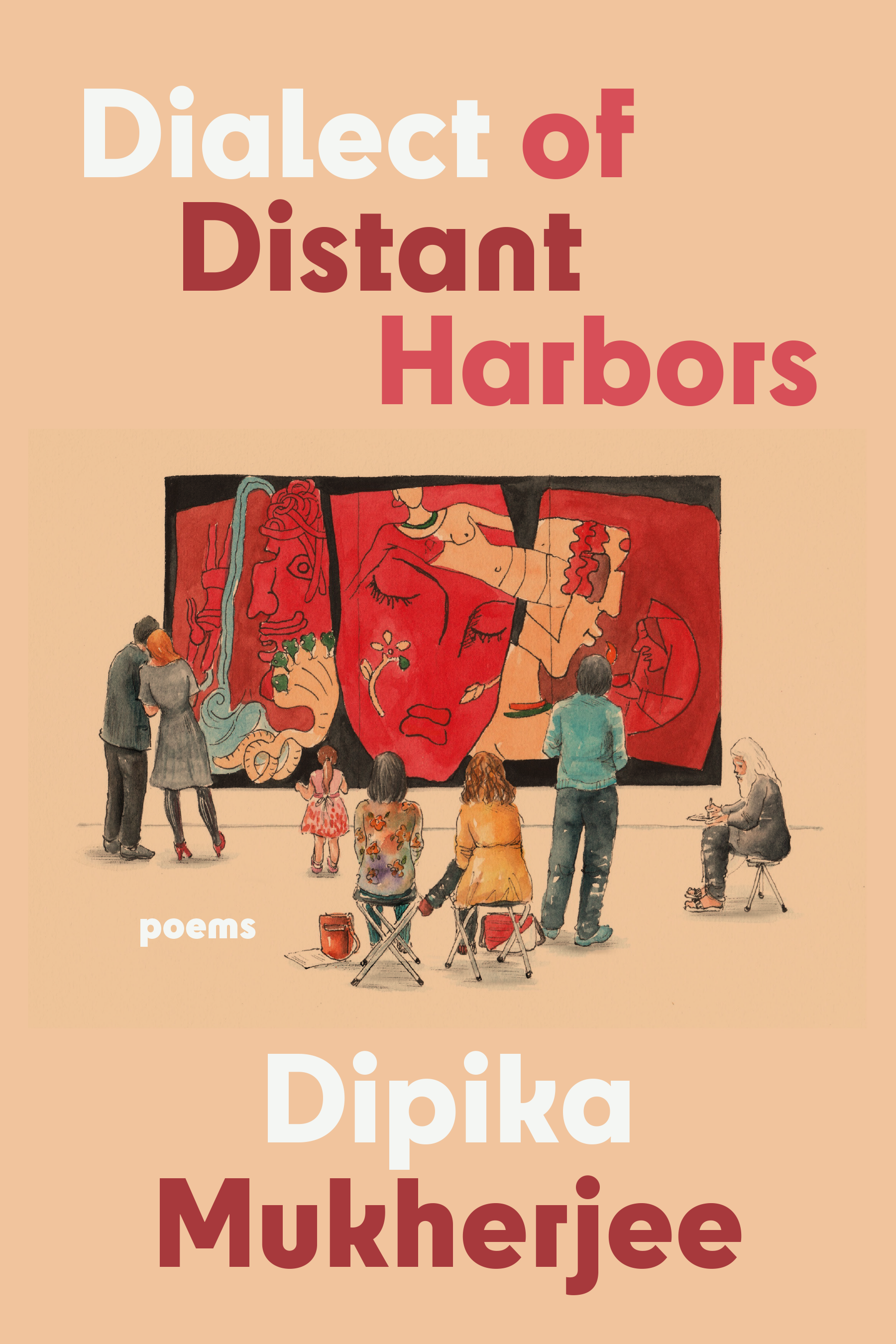
Dialect of Distant Harbors / Dipika Mukherjee / 2022

Dialect of Distant Harbors / Dipika Mukherjee / 2022

Despite a pen trained in craft, Mukherjee’s writing fails to find its rhythm in this collection. I had Anushka read a couple of poems to make sure I wasn’t just untrained in picking up the rhythms of a more Indian English, and she couldn’t make it through them. While Mukherjee picks complex material, she doesn’t have enough of a vision to say anything too profound about them in this collection. I read on despite Anushka’s suggestion that my time was better spent elsewhere. 1.5/5 

Entre los brazos de la neblina / Mariela Tax / 2023

Entre los brazos de la neblina / Mariela Tax / 2023

These plainspoken poems thread the realities of one contemporary Maya woman. The poems narrate cultural connection and loss, clap back against racism, linger on haunting mountainous landscapes, and cut through the fog with a clear sweet light in her voice. I found many 5/5 poems in this collection with my favorites being the punchier, longer poems like “la evolucion de mis pasos.” 3 / 5

Casa / Efraín Caravantes / 2021

Casa / Efraín Caravantes / 2021

This short collection will slink through your consciousness with the meditative deftness of The Four Quartets. It’s wild to see Efra capture that energy in a taut and delicate Spanish whose surprising turns open up pockets in your mind and soul. The untitled poems all flow into one another, each one like a wave in a bigger ocean, and like an ocean, there’s a peace I find spending time with these poems and the way their beauty transforms massages the bitterness out of grief.   5/5 

Peces en mi boca / Elena Salamanca / 2011

Peces en mi boca / Elena Salamanca / 2011

I’ve been a longtime fan of Elena’s work, so I was thrilled when Marcos Valerio Reyes Cisfuentes gifted me her first book in Guatemala this summer. Peces en mi boca is an explosive series of feminist poems, exploring desire and agency in ways that are equally fiery and fun. I will forever cherish the young, feisty voice in this collection. 5/5 

Equatorial / Soleil David / 2024

Equatorial / Soleil David / 2024

I read this book feverish during parent-teacher conferences in between sessions with teachers. Soleil’s voice is simultaneously impressive and the opposite of ostentatious. She captures the fury of monsoons in a delicate voice. There’s a way her rhythm washes over me that I haven’t quite figured out. Masterful poems like “Last Transit of Venus…”, a golden shovel flipping a classic Margaret Atwood poem, take me several reads to sink into its absolute splash of longing. I would reread and reread without any regrets. 3.5/5  

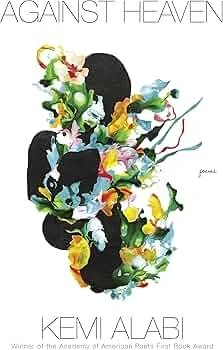
Against Heaven / Kemi Alabi / 2022

Against Heaven / Kemi Alabi / 2022

Against Heaven rekindled my love for poetry and inspired me to read more poetry after months of dragging my feet on some titles. It did so by its delectable combination of pin-like precision in form (the flawless double golden shovels, oh my) and the bubbling energy of its voice. Kemi inhabits a meditative and grounded eros that cohabitates with grief in a very present mundane way. Yes,  there's some healing, but it's the way scarring is healing, the way taking the time to be present and truly curious about grief can make it blossom into something deeper and soulful.  4.5/5

Golden Ax / Rio Cortez / 2022

Golden Ax / Rio Cortez / 2022

I'm kicking myself for not reading Rio Cortez sooner and am somewhat stunned we never crossed paths as young poets of color in Utah. Golden Ax forges a rooted Black identity in Utah in a way that feels deeply familiar in the odd and only way Utah is familiar. Golden Ax is an eco-poetics that feels dramatically different than most of what I've read of Utah environmental writing.  Perhaps it's in Cortez’s willingness to embrace her historic relationship to the land, to find joy and connection to it in a way that doesn't at all feel romantic of the past, present, or future, or perhaps as viscerally angry or stormy as me or most other writers of color who I’ve happened to read. Golden Ax is a Black feminist counterpoint to (slave) master narratives of Utah and nods to Brigham Young and Sun-Ra, the Broad Ax, and other historic touchpoints to elbow her way into a fully realized Utah Blackness. The poems are full-bodied, lyrical, and thoughtful in a way that made me feel like I just had an amazing dinner convo with Rio, complete with music recommendations, Utah upbringing stories, and soulful contemplation of our racial and environmental predicaments. 4/5