Sentado a revés / Vladimir Amaya / 2019

Sentado a revés / Vladimir Amaya / 2019

Vladimir Amaya is a legend in Salvadoran circles, and this short chapbook dramatically illustrates why. Amaya’s work carries the same spirit of what some call la generacion de la sangre, or the Bloody Generation. These writers obsess over the violence and blood spilt in the streets, and I’d include writers like Moz, Sol Quetzali, and Miroslava Rosales as some of their most potent writers. Here, we get the shit imagery reminiscent of Rosales’ work in poems like “Mi patria se respite en los excrementos.” Overall, his work is some of the best in this heavy vein. 4 out of 5. 

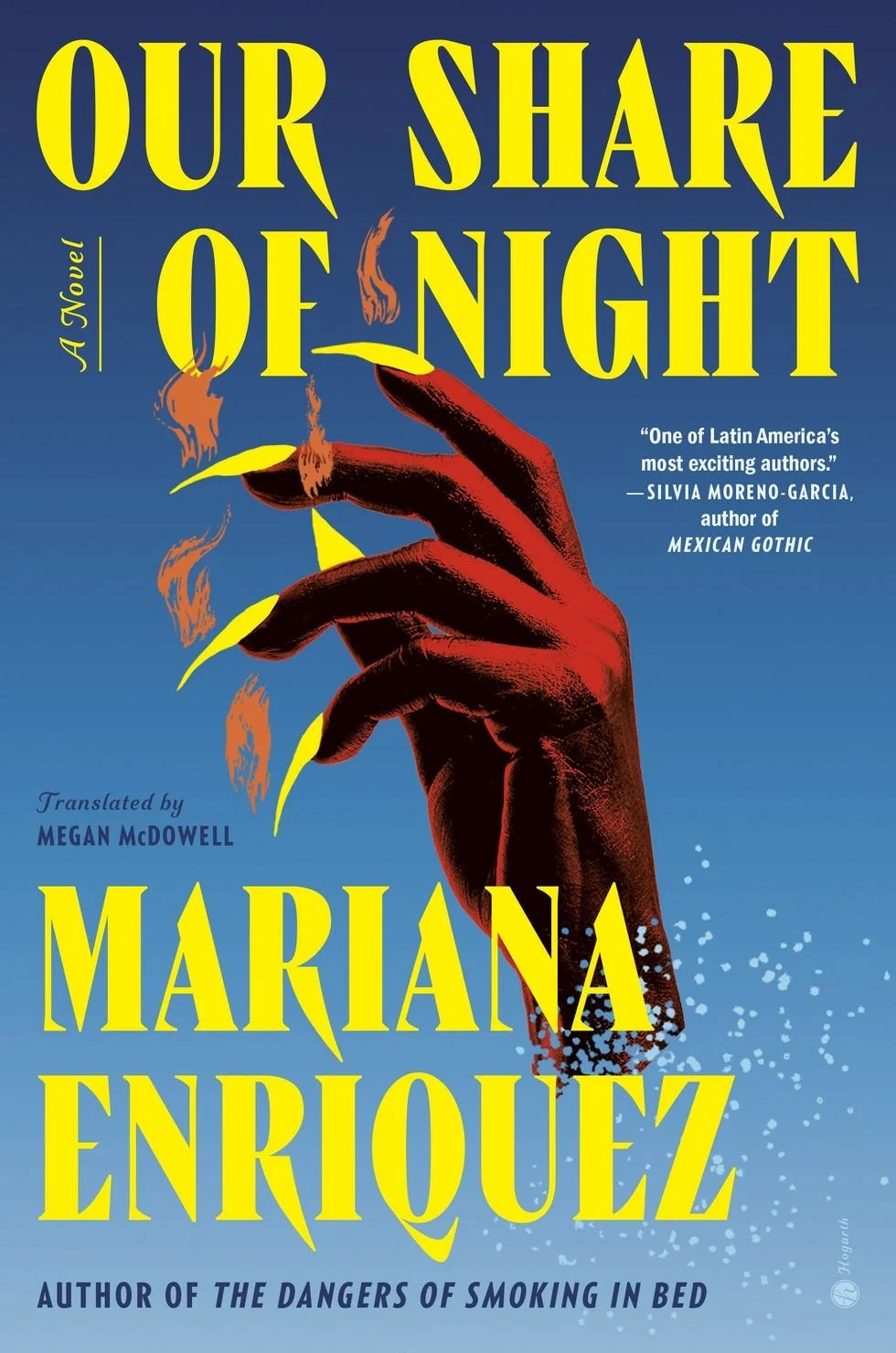
Our Share of Night / Mariana Enriquez, trans. Megan McDowell / 2023 

Our Share of Night / Mariana Enriquez, trans. Megan McDowell / 2023 

I picked up Our Share of Night because it combined my interests in erotica, horror, and Latin American literature. The novel did not disappoint on any of the counts. Enriquez is a master at capturing the historical, emotional and political zeitgeist of distinct cultural eras in history, both in Latin America and Europe, including rock and roll scenes, occult movements, and more. The magical oligarchy Enriquez invents is full of just enough intrigue, mystery and logic to drag the reader through horrifying scenes with an unsettled and confused, but fully invested. This is also done with master-level character work. How could one not feel for Gaspar, a young warlock whose inherited diabolical powers and is being hunted by his cruel murderous oligarchic grandparents to harness his powers? He’s a thousand times more compelling, developed, and realistic than Harry Potter. Every turn of the plot manages confuse, surprise, move, and intrigue. There is some questionable navigation of race that merits more exploration, but a closer inspection might reveal something more complicated and useful, even if not wholly unproblematic. 5/5. 

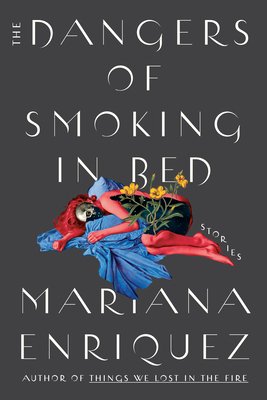
The Dangers of Smoking in Bed / Mariana Enriquez, trans. Megan McDowell / 2021

The Dangers of Smoking in Bed / Mariana Enriquez, trans. Megan McDowell / 2021

While generally well written, these short stories don’t have the same grip and vision as her novel does. It’s harder, it seems, to reach beyond a mere feeling of eeriness into something darker and more human in shorter work. Stories like “Angelita Unearthed” and “The Well” struggled to deliver a meaningful blow in my opinion. Enriquez’s racial dynamics are still complicated in ways that unsettle the reader. Still, I find some of those complicated portions the most interesting, as in “The Cart,” where a racialized and obnoxious vagrant is scared away from the neighborhood and leaves behind a curse. Other favorites include “Kids who come back,” “Where Are You, Dear Heart,” and “Meat,” each of which is just so fucking twisted and eery it’ll have you wiggling out of your seat. 3.5/5  

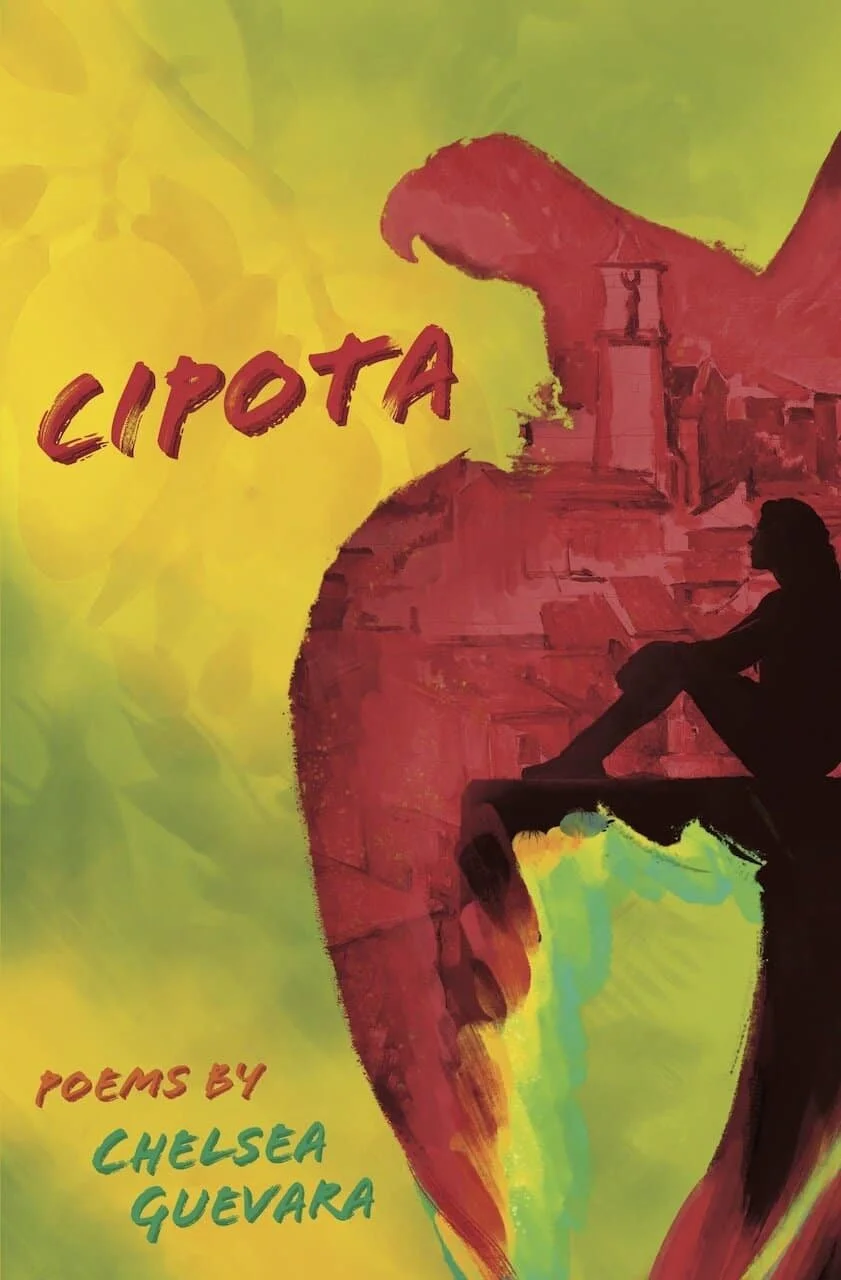
Cipota / Chelsea Guevara / 2025

Cipota / Chelsea Guevara / 2025
There is an undeniable verve in this collection, which is a coming-of-age story of a young Central American woman as she tries to recuperate her identity as a Salvadoran and recover from the losses brought about by migration, war, and perhaps most personally for the author, divorce. Guevara successfully articulates her ethic and hopes in a passionate, poignant lyric that will break your diasporic heart. The collection is young, but it’s named Cipota for a reason. I love it for the ways it reminds me of the most beautiful younger versions of myself, of many of my Central American peers.

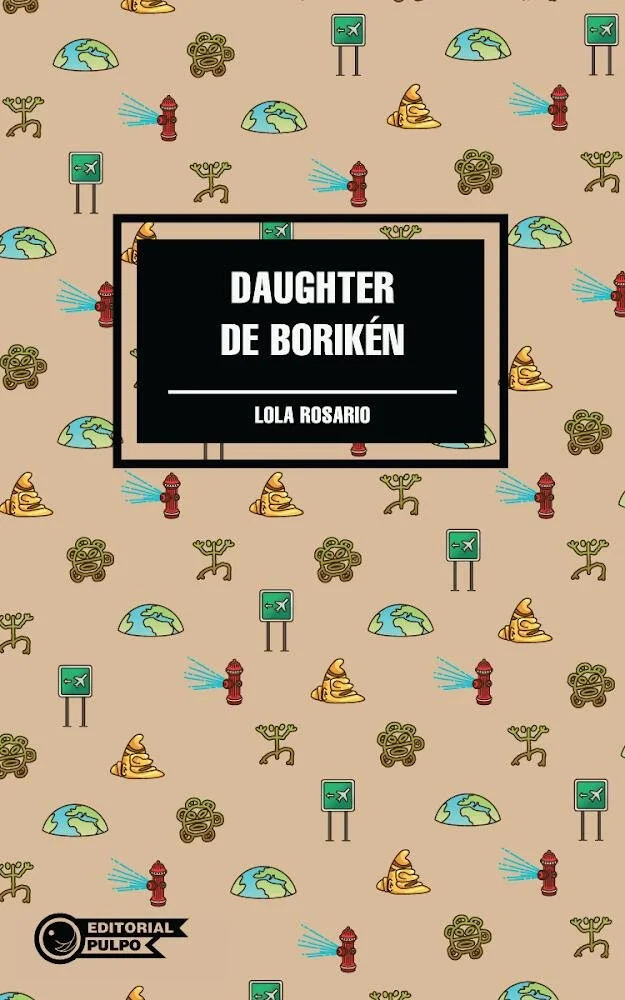
Daughter de Boriken / Lola Rosario / 2024 

Daughter de Boriken / Lola Rosario / 2024 

In Daughter de Boriken, Rosario bounces between nationalist pride and identity struggles. Hailing from Nueva Yol, she does her mandatory nods to the Nuyorican and low-income living. She rather pointedly rejects the Nuyorican identity for herself in “When I was Nuyorican,” a confusing move. In the following poem “Boricua Soy,” she doubles down, even when facing the criticism of a Boricua elder who insists she’ll never be Boricua. These tensions reflect commonplace struggles in identity development, and elsewhere she celebrates and laments her tongue, takes joy in la isla and the food, as expected of diaspora lit. One surprising feature is the author’s wealth. Apparently, she has the money to travel all over the world before realizing she needed to settle in Boricua in her 50s. The spoken word here is sensuous and playful, but a greater aesthetic or political vision would help ground the writing.

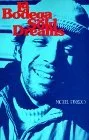
La Bodega Sold Me Dreams and Other Poems / Miguel Piñero / 1985

La Bodega Sold Dreams and Unpublished Poems / Miguel Piñero / 1985

Miguel Piñero was one of my favorite poets in undergrad. My writing sample for my graduate school applications was an essay I wrote comparing and contrasting “A Lower East Side Poem” with Javier Zamora’s “Instructions for my funeral.” I was eager to read LBSD to see how well his other work stood up to selected poems I had access to then, and to see whether I would even still connect to the poems in the same way. LBSD did not disappoint. Even unpublished poems like “Obreras” bring a vision and muscle I find lacking in so much contemporary work. “The Book of Genesis According to St. Miguelito” make clear a political vision in a fiery and funny way most contemporary slam poets could never. 5/5  

Double Book Review: Civil Resistance and If We Burn

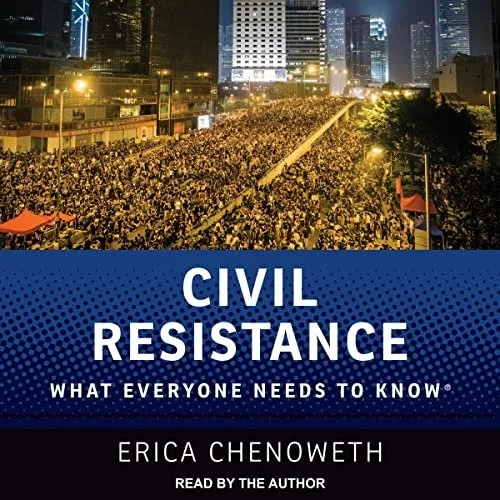
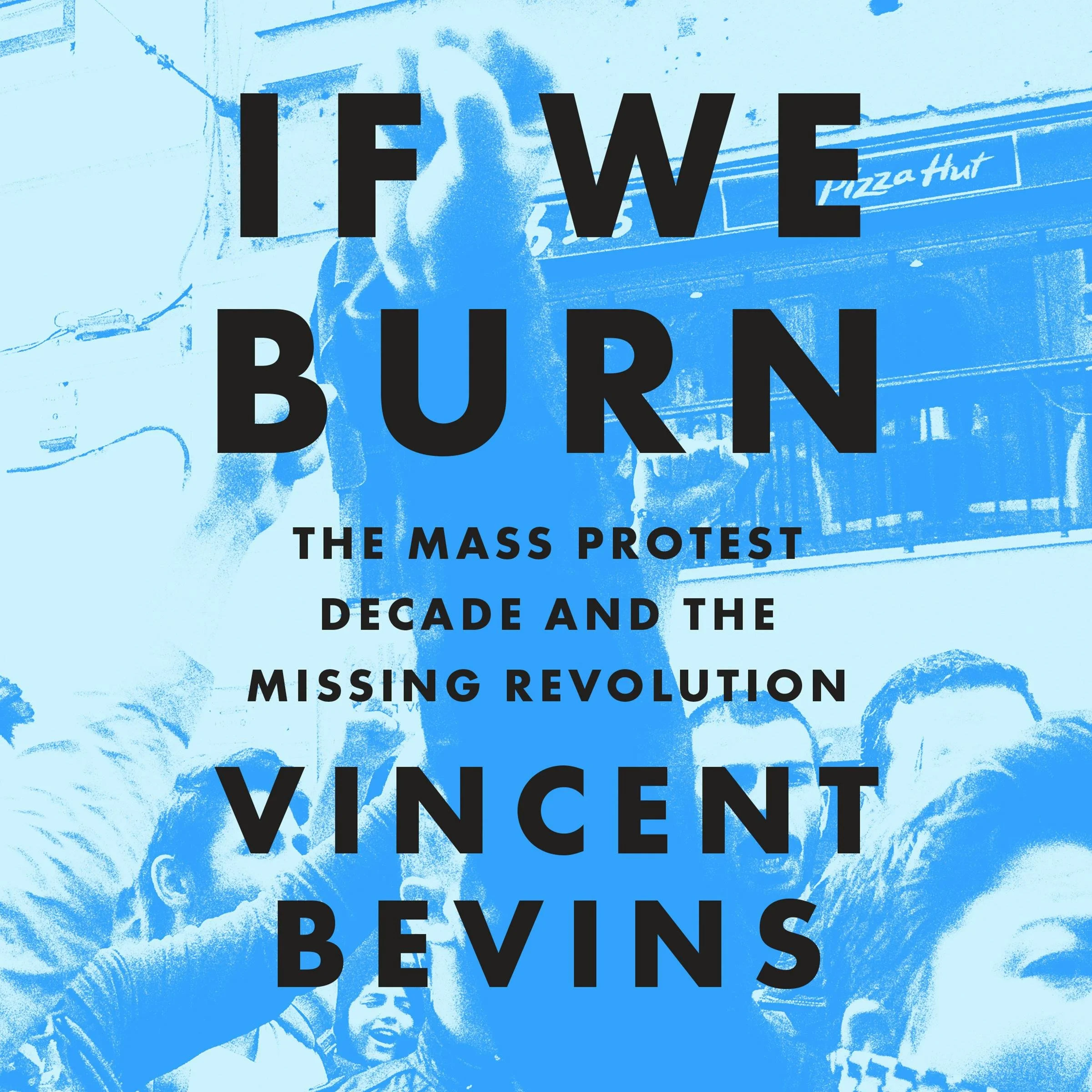
Civil Resistance: What Everyone Needs to Know / Erica Chenoweth / 2021 and If We Burn / Vincent Bevins / The Mass Protest Decade and the Missing Revolution / 2023 

I read Civil Resistance at the recommendation of a friend. If anyone else gets recommended Civil Resistance, I recommend you read If We Burn, instead, as it tackles the same questions in a much more intelligent and captivating manner. 

Below is a brief list of my qualms with Civil Resistance. 

  1. It does not know who its audience is. There’s a portion of the book that lists and discusses different methods of civil resistance. She spends a bit of time delineating when and why tactics like self-immolation, hacktivism, hunger strikes, leaks, property destruction and riots are  "civil resistance" and not. None of this is objectionable necessarily, but there's a tendency for baby organizer books to be advanced and rudimentary at the same time, which I think is just a weakness in writing. Like, hey, reader, I'm gonna explain street art to you since you need that, but also SELF-IMMOLATION even though you clearly still need street art explained to you. 

  2. I wastes its time with silly baby organizer questions like “has civil resistance been effective against racism?” “What about against corporations?” It's just silly baby questions anyone with a modicum of historical understanding can connect dots. The author claims civil resistance ended slavery, which is a mic-drop moment of stupidity. Because of course civil resistance was critical to ending slavery, and no, it was not nearly sufficient enough. Like have you heard of the civil war and Sherman's march? The UK didn't end slavery "in response to armed and unarmed revolts" alone necessarily, either. The Black Jacobins explains how the UK was losing the upperhand against other slavers and it economically behooved it to abolish slavery, take the moral upperhand, and use the newfound position as abolitionists to manipulate opponents colonial holdings. Hey Haitian slaves, we'll help you overthrow the French if you let us become your economic overlords and give you your "freedom." etc.

  3. There seems to be far too much determinism in how she views the aftermath of violence and nonviolence. For example, she blames Palestinian violent resistance for moving Israelis to the right. While she’s certainly right in part, she doesn’t take into account that 1) there's been global shifts to the right, suggesting other material and economic circumstances, like social media, etc, contribute to the problem 2) the other option for Palestinians and many other groups is a silent genocide. 

The tricky thing about her sort of analysis is we can't compare movements with what would've happened otherwise and for movements with a lot of dynamism and pressure, this book provides maybe just a reminder of the risks and benefits of violence. To be clear, I'm all for civil resistance. It can and has worked to get concessions from states. If that's your only goal, then it's clearly the wiser path. Civil resistance is also a critical step in any revolutionary process. You won't be able to lead a people's army if you can’t lead a well-coordinated boycott or civil disobedience campaign first. Marxist Leninists are sure to bristle at the ways this book is confusing the masses on what is effective protest and how to determine what sort of protest would be most effective. 

If We Burn, on the other hand, is written by a journalist who trailed and interviewed movement leaders in Egypt, Ukraine, Brasil, Turkey, China, and elsewhere for years to understand the shape of their civil resistance movements, and why and how they failed. Rather than encouraging folks to pursue the same tired strategies or pointing out with an almost doomerist tone that most strategies fail to yield substantial and long-lasting concessions, Bevins challenges readers to get more creative, organized, and centralized in the face of defeat. Notably, he pointed out that of the leaders he interviewed globally, when they shifted perspectives, they universally shifted towards wishing they had been more centralized and hierarchical, rather than decentralized, so that when it came time to seize power they would have been ready. They realized, there is no such thing as a political vacuum. Political power will be seized with whoever has the means and will to do it. You can’t just remove a bad actor and expect things to work themselves out. Things can always get worse. 
While Civil Resistance includes decontextualized, shallow descriptions of a range of social movements, If We Burn provides in-depth narration shaped by key movement figures and an invested leftist journalist’s analyses. Civil Resistance deserves a 1 out of 5, especially compared to If We Burn, which I’ll give a 5 out of 5.

Communists in Closets: Queering the History 1930s-1990s / Bettina Aptheker / 2023

As many shortcomings as this book may have, I found it an incredibly valuable window into the communist movement in the United States, especially in terms of capturing the zeitgeist of different eras and connecting the dots between major historical events and how they impacted the lives of our communist queers. It was beautiful and heartbreaking to see how the Black Freedom movement, the Red Scare, the Cultural Revolution in China, so forth and etc collided in the lives of our progressive forebears. Communists in Closets tracks the inspiring forging of solidarities and the heartbreaking exclusion of the minoritized. It made me realize you cannot understand the BIPOC history of the United States without understanding Marxism and the communist movement’s critical role, long obscured by K-12 public education in the United States. 

Bettina Aptheker is the perfect, somewhat sus narrator. A red diaper baby (that means she comes from blood-red communist parents!), Bettina had privileged access to the movement. Her first job was literally working for WEB Du Bois, for example. This privilege is not untroubled. Aptheker gained notoriety for outing her father as her sexual abuser after his death in her book Intimate Politics, first published in 2006. Her communist stripes, however, were first earned in publishing a major history of the trial of Angela Davis, which she both recorded and organized in support of Davis. She’s about 80 now and there are occasional gaffs in her writing. While her racial politics are usually solid, she refers to a particular neighborhood as historically “Negro” at one point. She also has a strange moment where she talks about how one elder communist feminist was, of course, anti-Trump and, somehow just as obviously, a Hilary Clinton supporter. The book deserves to be criticized for its writing style, as Aptheker’s portraits read a bit quaint, by which I mean to say it routinely feels like a grandmother is telling you long-winded stories. Aptheker occasionally indulges in litanies of awards her acclaimed queers earned in a way that provides a shallow, if lettered, understanding of the impact of their work. As much as these shortcomings might rub some readers wrong, the historical material was so poignant for me, that I was engrossed in the reading. 

I especially loved the portrait of Lorraine Hansberry, although I worry Aptheker may have leaned a little too heavily on Imani Perry’s work here. There was one moment in particular where Aptheker describes how Hansberry met with two other prominent Black communist women to organize resistance against the US coup of President Arbenz’s socialist government in Guatemala. This moment of international solidarity, to know that Black women in the blistering racism of the 1950s, saw my Central American kin and fought for us, stopped me in my tracks and moved me nearly to tears. Most heartbreaking of all, all of these women were lesbian yet so deeply closeted that they likely never knew about one another’s sexual orientations for the entirety of their lives. Aptheker does a profoundly good job showing how the closet psychologically tormented these prominent communists, who continued to risk their lives and well-being for the communist movement, despite its rejection of them. Such unfaltering love in the face of such cruelty is perhaps the queerest thing about this book. 

I also found the 5/5 movie Salt of the Earth through this book. The movie starred Rosaura Revueltas, a prominent Chicana lesbian! I am always happy to learn more about Paul Robeson, who was not queer, but appears throughout the book as a prominent communist. Turns out white mobs used to try to stop his performances and lynch concert goers. 

I love this book despite its blemishes. 4 out of 5.   

The State and Revolution / Vladimir Lenin / 1917

I admit I stayed away from Lenin, fearing he’d be a difficult and academic read. I was sorely mistaken. Lenin writes with a spunky lucidity, sparring with anarchists, opportunists, social democrats, and others to delineate the Marxist path to communism. The State and Revolution is a must-read for any would-be abolitionist and leftist of any persuasion. Lenin masterfully sinks his teeth into the strategic weaknesses of his peers and builds a firm argument for the need for a proletariat-led revolution and dictatorship of the proletariat. These WWE-style takedowns better makes me understand the divisions among leftists better, as the urgency of the revolution and the truly opposing perspectives inevitably create a powder keg in dangerous circumstances. While I have my own criticisms and questions about the work--how do we ensure that state power does not corrupt revolutionaries, as it has in the Soviet Union and China?, for example--this is the strongest theoretical ground I have found to stand on at the moment. Looking forward to reading more Lenin and dipping into more Marxist theory soon. 5 out of 5. 


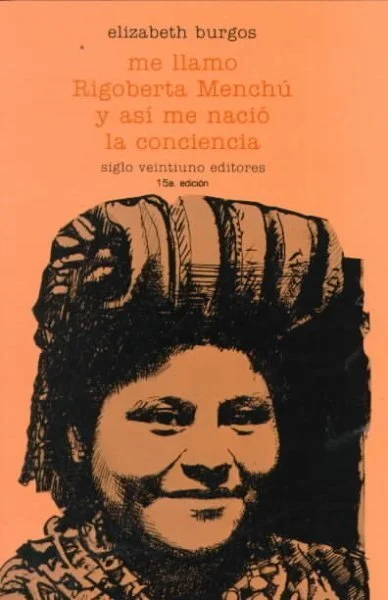
Me llamo Rigoberta Menchú y así me nació la conciencia / Elizabeth Burgos / 1983

An extraordinarily compelling testimonio on the lives of Maya campesinos, Rigoberta Menchu’s story hit me en las madres. The testimonio includes interesting details about specific cultural practices, like marriage and birth rites, and beliefs, such as the syncretic Maya Christianity and relationship to naguales. Interestingly, here Rigoberta made clear that her community didn’t ostracize or stigmatize diverse sexual orientations and gender identities queered and oppressed in Western societies. These details as a whole provide outsiders with a bridge into Maya cosmovision and provide assimilated indigenous and mestizo readers an opportunity to reconnect to a bit of what was lost. The portions of the testimonios describing the poverty, organizing, resistance, repression, and torture were deeply moving and harrowing to read. Rigoberta’s testimonio is an invaluable part of the repressed indigenous marxist tradition I am currently reading my way through right now.  5/5

Telling Tales / Patience Agbabi / 2015

This is one of the best poetry collections I’ve read in a minute. The poems translate Chaucer’s Canterbury Tales into a contemporary Black vernacular, riddled with rhyme and verve. This marriage plays spectacularly into hip-hop’s sensibilities and Agbabi has the rapping ability and scholarly muscles to really make these transcreations pop. Anushka and I howled with delight while reading these poems. 5 out of 5.

Tropical Town and Other Poems / Salomon de la Selva / 1918

Published in 1918, Salomon de la Selva may be the first Latino poet published in the US and is certainly one of the first Latino authors published in the US--period. Though Nicaraguan-born, he was US-trained and thus learned to navigate--and found moderate success--in both the yanqui and Latin American literary scene. Stylistically, his verse reads like his romantic contemporaries, which means he feels like a Longfellow knockoff. Topically, he occasionally bares his teeth, discussing his homeland from an overtly political perspective. Contemporary readers may find even these poems hampered by the style and inconsistent politics. He occasionally longs for white girls--whomst amongst us has not? According to this collection, his deepest darkest secret is that he once made love to a tree, surely and hopefully in the romantic sense and not the pornographic. I recommend this book to those with a historical interest in Latino authors and Central America, but few others. 2 out of 5. 

Yin Xin Tang: Journey into the Center of Yourself / Wei Fo Jung / 2024

As a practitioner of qi gong under the tutelage of master Wei Fo Jung, I found his book useful in introducing me to the range of arts important to the practice of the yin xin tang school of martial arts. Some of these elements may be surprising, like the art of eating or the art of sleeping, where traditional masters offered thorough instructions for how to intentionally do something for maximum health and benefit, which we all mostly just do mindlessly. Some elements of this book will mean more after a student has some concrete experience to connect for the texts. For example, the lineage chapter clearly states that one of the roots of yin xin tang is the practice of tantra. This meant very little to me until Master Jung introduced tantric elements into my actual practice. Many of the explorations here are introductory glances into profound arts, such as meditation or the study of the mind. In one charming journal entry, for example, Master Jung describes a conversation he had with his master as a child about the nature of the self. The journal entry doesn’t arrive at any clear answer or distinguish in much depth the journey to attempt to arrive at an answer. That’s fine for an introductory text, intended to inspire and accompany study with a master, not replace it. In that sense, readers should not expect this book to teach them yin xin tang, but rather introduce them to the core areas of practice in yin xin tang and some of their history. That’s all. 4 out 5 


The Haunting of Hajji Hotak and Other Short Stories / Jamil Jon Kochai / 2022

Goddam this is a good short story collection. Much as There, there by Tommy Orange captured the range of heat and friction in the urban Native experience, Jamil Jon Kochai’s characters wrestle with the whole of Afghanistan’s history as the cultural impact of Islam and the ever-present traumas of war, migration, and imperialism put their whole weight on their lives. Its hard to describe the magical realism of the collection, because Kochai somehow pulled off incredibly hokey and heavy-handed metaphors; in fact, these exact metaphor managed to capture sometimes horrifying, sometimes darkly humorous, sometimes gorgeous elements of the Afghani experience that beating us over the head with relentless realist trauma just wouldn’t be able to do. There’s a story, for example, where a couple keeps receiving portions of their boy child’s dismembered body. The father goes on a goose chase looking for a police officer or an official willing to do anything. The mother, on the other hand, slowly sews their son back together. Such a dark premise sounds like an awful, heavy-handed undergrad idea in summary. Kochai made this spellbinding. There’s a story where a gamer, who loves MF DOOM (apparently a favorite for men of color short story writers like Kochai and Orange), ignores his family’s worried and troubled cries as he binge plays Metal Gear Solid V, which takes place in Afgani villages, much like where his father grew up. I am especially grateful I read this pulsating collection after reading Max Blumenthal’s The Management of Savagery, which included a rather clinical history of Afghanistan. There’s a way political argument can summarize atrocity after atrocity  in a couple of bloodless paragraphs, where a fiction writer can yield a gallon of blood from a single poetic phrase. The Haunting of Hajji Hotak and Other Stories burns with the fires of Afghanistan’s history and glides with the slick ice of a master fiction writer’s pen.    5/5

Defectors: The Rise of the Latino Far Right and What it Means for America / Paola Ramos / 2024

Defectors would have been a more useful book if it was published a couple of years ago, but better late than never I guess. For those of us who are politically conscious and aware of the news, Defectors will hardly offer anything new. Ramos does, however, synthesize research, news, and observations about the Latino right in a useful and clarifying way, if only to let us know there’s likely not a weird unexpected factor we hadn’t considered yet. 

Briefly summarized, Ramos identifies the three elements fueling the Latino far right as traditionalism, trauma, and media spheres in the global south.  

This is a surprisingly white supremacist history of Utah Latinos.

Because Ramos is a journalist, however, and not a historian, she fails to trace the historical roots of some of these traditions. For example, Ramos rightly identifies the patriarchal, family values in most contemporary, traditional Latino households, as well as the white supremacist threads in the ideology of a Latino far right leader who defended the statues of Spanish colonizers and celebrated only his Spanish heritage. She failed to identify how common national racial myths, such as mestizaje, perpetuate racism. Defectors makes it seem like these people emerged out of the mists, when I’m sure racist Latinos were apart of nearly every major Latin American populace in the United States. In Utah, this includes figures like Danny Quintana, who celebrated his Latin connection to the Roman empire, one-upping backward white people who descend from less civilized white stock. This part of the book was by far the most annoying and untenable, because what Ramos failed to articulate is that some Latinos are just white, far-right, and fascists and have represented those factions historically in their homelands. Latinos are so far from ideologically, ethnically, or racially monolithic, and Defectors behaves as if we once were. 

When it comes to the historical traumas, Ramos sometimes does not articulate some of the deeper contexts behind the masses’ reactions either. For example, her prescient discussion of Salvadoran dictator Bukele failed to adequately describe the gang crisis in El Salvador and the factors that led up to it. For those unaware of the right wing movement in Latin America, from its evangelists to the Republican funders and the fascists eager to bootlick Bukele and Pinochet, this book is critical reading.

As someone who has lost confidence in the social integrity of the Latino label for a while now, considering its net just too damn wide to meaningfully organize around, I found some of Ramos’s appeals to Latino identity to be too romantic. That said, I am inspired by the works of groups like Mijente, who organize and fund Latinos nationwide. I read this book, as a part of Mijente’s book club although I wasn’t able to attend the in-person gatherings. Learn more about mijente here: https://mijente.net/

Overall, I give this book a 4 out of 5, as its info feels spot-on. I just wish it occasionally fleshed a topic out in greater depth. 

The Black Jacobins / C. L. R. James / 1938 

The Black Jacobins narrates the story of the Haitian revolution largely through its focus on one of its most critical figures Toussaint L'Ouverture. James narrates the military drama with a novelist’s eye for detail, psychological depth, and tension. His occasional asides to provide his own thoughts and connect the history to his times are revelatory and shrewd. It can be easy to be fatalistic about the rise of technofeudal fascism in our era, but during the Haitian revolution, a largely enslaved population had to shake off the chains of three imperial powers: the French, the Spanish, and the British. James spares no detail on the cruelty of the slaver’s torture tactics, from the burying of Africans to be devoured slowly by ants to the dogs to the branding. In some of its most moving passages, James narrates how in the last battles of the war, the generals told their men they did not need to fight with bravery but with an abandoned rage to survive and win; the formerly enslaved faced their deaths with an unhinged pride and resolution that stunned the colonizers. James astutely points out the catch-22: the enslaved were accused of being less than human for their “willingness” to accept slavery, but when they resisted it with all their might, sometimes petting the dogs sent to devour their limbs, other times placing the noose around their own necks at the gallows, they accused them of being incapable of feeling human pain, of being monstrous in their strength. I could say more, but you ought to just read it. 5 out of 5.

Technofeudalism: What Killed Capitalism / Yanis Varoufakis / 2024

Known for his charisma and charming writing, Varoufakis is one of the leading leftist figures arguing that our economic system has fundamentally transitioned so that its axis rotates not around capital, but cloud capital, thereby ushering in the age of technofeudalism. While the distinction between technofeudalism and capitalism may seem like technical minutiae to most folks--and likely is--for political strategists and organizers especially, it is critical to have clarity on who are enemies are and how to best combat them. 

The term technofeudalism does a great job at singling out our greatest enemies of the moment--the tech oligarchs--and describing their vice-like grip on the economic system. Anushka would argue that the critique of technofeudalism make the bloody-thirsty capitalists of our day almost seem like poor victims of these new gangsters, and Varoufakis himself argues in the last pages of Technofeudalism that we would in fact need to create a broad base coalition including capitalists of many stripes to defeat the challenge technofeudalists pose. The risk here is that people forget that we need to dismantle capitalism in order to escape these hellish cycles of history. In “Critique of Technofeudalism” by Evgeny Morozov in New Left Review, the author outlines technofeudalists thinkers, including Varoufakis, but also including right-wing thinkers (Thiel and Yarvin). Morozov covers impressive ground outlining the differences between feudalism and capitalism and ultimately arrives at the conclusion that as ugly as this phase of capitalism is, it doesn’t merit another term because companies like Google and Facebook earn money through much more than just “rents.” 

As a non-economist, I have few horses in this fight. Reading Varoufakis, however, did clarify for me some of the basics of global economics and the challenges tech oligarchs pose, and he did so in really captivating and easy-to-parse prose. Because of this, I highly recommend his book. Morozov may be more correct, but he was way more academic and drier. Ultimately, I think most of us just need to understand the grip these bastards have on the globe better and Varoufakis can help you get there quicker. As the US continues to undergo a technical coup and flagrant Nazism spearheaded by tech oligarchs who subscribe to right-wing technofeudal theory, Varoufakis focus seems more and more necessary, although I admit I’m unsure if he is technically correct--I simply am not an economist. 

Wednesday February 26th, Robert Evans published a summary of a warning Democratic insiders are sharing among themselves about the dangers of Curtis Yarvin, Elon Musk, and “Neo-Reactionaries.” The letter outlines what could be called a technofeudal plan to dismantle the United States. Technofeudalist might ultimately still be capitalists, but I think the term is worth retaining for understanding how they view themselves within the capitalist landscape. For me, the dramatic speed of technological evolution--we’re literally in a world with killer robots and AI-boyfriends--justifies a terminology that distinguishes this phase of capitalism from the last. 4 out 5.

Pedagogy of the Oppressed / Paolo Friere / 1968

Many professors and ethnic studies students are at least aware of Pedagogy of the Oppressed and many have at least read chapter 2, which distinguishes the vertical banking method of education from a horizontal dialogic one. I decided to read the whole book because Ceiba Collective wanted to begin doing study groups and the committee decided a leftist book on pedagogy felt like a good place to start. I’m grateful I read the whole book, especially because of chapters 3 and 4, which argue that dialogic problem-based education is essential for revolutionary struggle. Everywhere you see liberals and the left talking about the desperate need for better messaging, sloganeering, etc. Friere would argue they’re doomed if they simply play the same game of the right, manipulating the masses and treating them as incapable of building solutions to their own problems. Friere argued for the need for dialogic problem-based education through every level of the revolution, building a strategy for struggle alongside the working masses. This is critical, because if we only win through messaging, every victory of the left will be short-lived as the masses will not have developed the critical thinking skills to see through the lies of their enemies. For me, this is the most interesting part of his argument, and worth debate in leftist organizations.

Pedagogy of the Oppressed was specifically used to develop popular education with illiterate folks meant to organize them in defense of their community. Friere’s method was used widely throughout the world and in particular Central America during their revolutionary struggle in the last half of the twentieth century. At the same time, Friere’s advocacy for education also meant that his work was used to construct systems of mass education, which despite Freire’s advocacy for a revolutionary method, still served ultimately as a force to colonize the poor and indigenous, disrupt their ways of life in service of an education that frequently ill-prepared them for the challenges of their community. Gustavo Esteva is especially critical of Friere on this part, although his criticism is laden with the worst types of decolonial nonsense, such as arguing that illiteracy should be celebrated and cherished, as if many colonized people, including First Nations peoples throughout the Americas, didn’t have sophisticated reading systems prior to colonization.  4 out of 5. 

Love is an Ex-Country / Randa Jarrar / 2022 

I read this book at the recommendation of my friend Casira, although it’s been high on my diaspora literature list for years. This memoir is bookended poorly, starting with an eat-pray-love-esque road trip across the US searching for purpose and ending with a hardly believable scene of “healing” her troubled relationship with her father. 

In a creative writing class once, a poet once told me good writing requires at least two of the following: 1) incredible personal experience 2) astute observation or 3) excellent fluency and artistry with language. Of course, a master writer would have all three. Jarrar mainly has #1 with a spark of #3 sometimes. The memoir is compelling because of the unenviable amount of abuse Jarrar suffers, which she narrates bluntly and painfully. We get glimpses of child abuse, overcontrolling parents, abusive partners, and even dystopic scenes with Israel locking her in a holding cell and preventing her from returning to Palestine. Her descriptions of kink are clumsy, however, as well as some of her expression of her own feelings around the messy bits of race, gender, and queerness. The narration of kink especially reads as the journal of someone who just experienced something, not someone who has thought about the discourse around it and is entering that discourse thoughtfully. Even so, it was a captivating read, even as it fell into so many traumatophobic tropes.  3 out of 5.

El Verbo J / Claudia Hernandez / 2018

Written in a breathless, breakneck speed, El Verbo J narrates the story of a trans woman during the wartime El Salvador. Once I realized what was happening in the book, I practically foresaw with terror and heartache the inevitable plotline: you get story of the boy bullied for his queerness, forced to hide and flee from el ejército, as well as the story of sex trafficking during migration and suffering the AIDS crisis in one body. The magnificent and shattering work of El Verbo J is to remind us that queer people existed during these times as well. While most wartime narratives are derived from the stories of masculinist guerrilleros a la Che Guevara and Roque Dalton or in self-sacrificing parents, El Verbo J zeroes in on queer stories submerged within the howls of others, whose stories dominated more historically. The story is told with a swift almost stream of thought narrative that whiplashes you, dropping you into scenarios without context only to unravel and explain later. Central American scholars talked up this book to me a lot before I got to it (via LibroFM :D) and it deserves all its praise and more. 5/5