Viewing entries tagged
Fiction

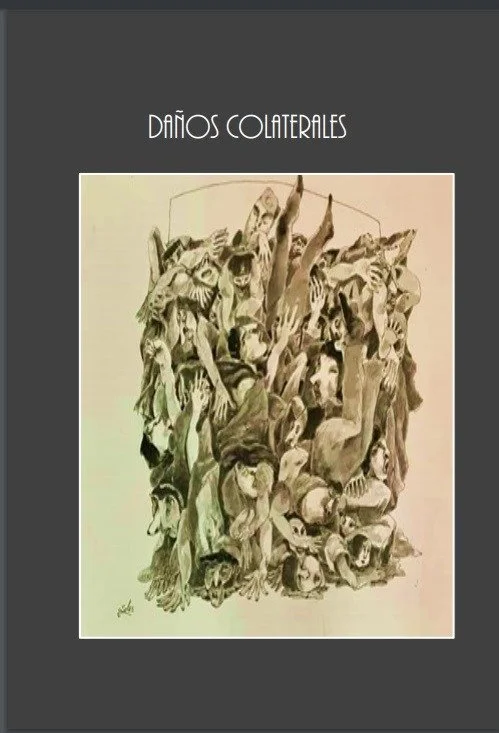
Daños Colaterales / 2025 / De León Granados, Derlin (Compilador) Hernández, Pereira, José Ricardo (Compilador) Rauda, Llich (Compilador) Gonzáles Márquez, Oscar (Compilador)

Daños Colaterales reads like holocaust fiction. The heavy handedness of some of its cruelty would be unimaginative if it wasn’t honest. Its inhumanity is made bearable by the genius and compassion of its writers. A rogue smile flashes on my face whenever I read the ending of “How To Play” by Antonio Cruz, wherein children negotiate a game of cops and robbers with the rules of the State of the Exception. It ends with children articulating an abolitionist vision: the game is only won when there are no more cops, no more presidents, no more robbers, and only civilians. The civilians tell the rest of the characters that they better start running. The authors in the anthology here don’t rely on strictly realist narratives. In “A Quick and Effective Solution,” David HP employs a slick parable. In “Flashback Arrests,” Walter Melendez takes us on a spin through the multiverse, tearing past the fabric of time to highlight the absurdity and the spiritual costs of the State of Exception, all rendered in exceptionally gorgeous prose. When the writers do explore realist depictions, many do it through captivating personas, such as that of an envious woman who sent in a false report on one of her competitors or that of a group of professional mourners who attend funerals on a daily. The writers in this collection are risking their freedom and safety in speaking out. I was consistently impressed by both their craft and bravery in this necessary collection.

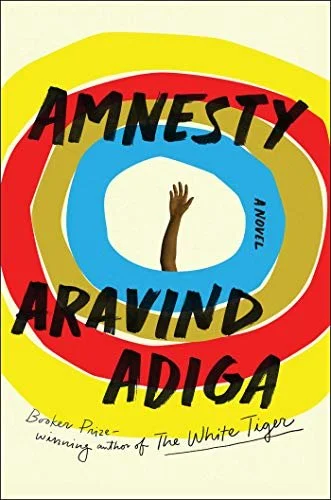
Amnesty / Aravind Adiga / 2020

Amnesty / Aravind Adiga / 2020

Amnesty tells the story of an undocumented Sri Lankan housecleaner in Australia who becomes privy to compromising details about a local murder. I picked up the book not just for its juicy premise, but curious as to its potential as a piece of global undocumented literature. Most of the literature about undocumented people or by undocumented writers I am aware of is written from within the United States, shaped by that country’s politics and discourse. I was curious in what the conversation was shaped like elsewhere and, as I still haven’t given up my dream of eventually teaching an undocumented lit course, I wanted to see if it would be a good fit for that course. 

Despite its juicy premise, Amnesty struggles to tell its story in a way that feels urgent or gripping. Its narrative detail and characterization are generally fine, but for a book putting itself in the middle of a fraught sociopolitical issue, it narrates the rhetoric around immigration clumsily. Undocumented folks are referred to as “illegal,” some aspects of the text seem to attempt to strike neutrality, while others display the racism of the system and culture bluntly. It was hard to tell what was at stake for the narrator, besides a quaint, philosophical challenge about a hot topic.Throughout, Danny’s condition is treated like his primary conflict, and where the text could have chosen to focus more on his interior longings, we instead get a very lopsided story arc. The lopsided-ness is crucial to creating a sense of suspense in the narrative, because otherwise, there would be no mystery in the murder. Adiga seems to think hiding details and sharing them later would build a sense of urgency or mystery, but it does not. It just gave this reader a sense of confusion and at times boredom. 

That said, the writer is clean enough that this book might be worth including in a course, specifically to talk about the way writing by undocumented and documented writers about migration differs and introduce students to an undocumented condition in a different context. I would hardly recommend the book to anyone though. 2.5/5.

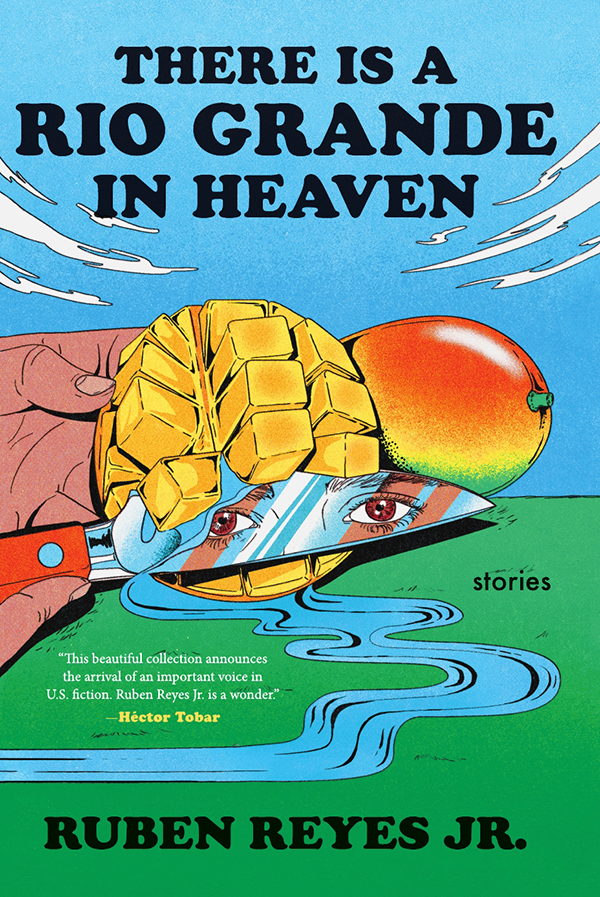
There is a Rio Grande in Heaven / Ruben Reyes, Jr. / 2024

There is a Rio Grande in Heaven / Ruben Reyes, Jr. / 2024

Much lauded by critics (Kirkus Reviews, Back Shelf Books, Book Browse) and Central American diaspora organizers in multiple cities and the like, There is a Rio Grande in Heaven won Reyes, Jr. a lot of success and adoration in a small corner of Latino lit. I struggled to see what the fanfare was about. Here is my take by take: 

Alternate History of El Salvador or Perhaps the World - I was unimpressed with this story as it plays out a romantic fantasy of indigenous resistance in a really fanciful way. It doesn’t actually consider the material historical circumstances and what it would have taken for the Pipiles to fight off Pedro Alvarado. Instead, it imagines Alvarado as a stand-in for what was an entire imperial enterprise that could not be ended by simply killing off one man. In this sense, it gives Alvarado FAR too much credit. This story also didn’t acknowledge the indigenous collaboration with the conquest of El Salvador by Tlaxcaltecans, Zapotecs, and the like. To me, it reads like the decolonial fantasy of someone who has barely read history, who has yet to truly grapple with the rich material at hand. 

He Eats His Own - This story seems successful in that it would be a great conversation piece to talk about privilege of the diaspora versus those in the homeland. In this story, a rich gay diasporic Salvi named Neto pays his loved ones in the homeland to send fresh mangos from a specific tree to him regularly. The fixation is pathological in its intensity. As far as a premise goes, the symbolic choice of the mango is apt and the scene is set for some interesting tension.

The weirdest parts of this story to me, however, are its seemingly unintentional absurdities. The one that frustrates me the most is the description of the main character cutting the mangos in six perfect pieces. This is dramatically absurd. No one who cuts mangos regularly could write this. Anyone who cuts mangos knows that they are cut in 5 pieces: two short, two wide, and the seed. As an oblong fruit, there is no geometrically possible way to cut it in six pieces that could be described as “perfect”, especially considering that fruit is natural and therefore comes in imperfect shapes. This bore greater explanation. 

Absurdities like these riddle the relationships in this story. For example, the family dynamics don’t make any sense. How does Neto maintain such close ties with his homeland family exclusive of the rest of his family? How would he be able to hide Tomas being in the States without the rest of his family knowing? How would he be able to hide the death of the mami from them? Why would they be afraid of leaving Tomas alone? Yes, he’s a child but he made it across the desert with the coyote. The suggestion that a starving child would have made it across the desert without eating the mango was really bizarre and required the suspension of critical thinking in a way that troubled me. There’s many moments where it’s just like, this isn’t how rational people would behave. 

That said, it’s interesting. Not moving by any means, but interesting in the conversations it seeks to spark about tensions between diaspora and homeland relations. 

Try Again - In this story, a gay man chooses to resurrect his father through an AI bot. His father was a homophobic poet who survived the civil war. It was a sad, probing story, and one of the better stories in the collection. 

An Alternate History of El Salvador or Perhaps the World II - Clean, slick story about General Martinez rearranging peasant bones from mass graves into a dinosaur. This is one of the stronger stories in the collection.

The Myth of the Self-Made Man - This is perhaps the best story. In this story, companies invent cyborg nannies/slaves by mining migrants’ bodies and erasing their memories. While the setup was appropriately gross and kinda hard to get into, by the time it gets to the migrant’s stories, the story gets really compelling. This story probably would’ve been better as a novel, as it doesn’t feel developed all the way. The main character doesn’t seem to go through a transformation of any sort, which is pretty standard narrative craft. While there’s an interesting critique of academic scholarship’s failure to do more than document sometimes, I was ultimately left feeling like very little was done with such a juicy concept. 

Quiero Perrear! and other Catastrophes - This story is insultingly bad. A dude wakes up as a reggaeton star with a dark gay secret in a story that asks for the reader to repeatedly suspend their critical thinking skills to follow the plot. There are multiple unexplained instances of memory loss and identity transformation/disappearance. This amount of critical thinking I had to suspend to attempt to enjoy this story depressed me. Like none of Reyes’, Jr. editors or press gave a shit about his craft if they let this story get through. The story ends with a big “it was all a dream.” 

By this story, I was stunned by the repeated appearance of a neurotic bisexual or gay male character in this short story collection. At least two deeply struggle with social acceptance. It’s a weird note to hit over and over again, and the reggaeton story feels like the epitome of this poorly explored cliche of the bisexual man fighting his demons. 

Alternate History of El Salvador or Perhaps the World (Selena Story) - This story is simply unforgivable coming from a Salvadoran author. In it, Selena never gets famous, but instead, a Salvadoran singer and rising star later covers Como La Flor and she’s the beloved one instead of Selena. This story reads like a confession that Reyes’ Jr believes Salvadoran-American identity is just a pale desperate echo of Mexican-American identity, something the worst of our Mexican peers are suspicious of already. That combined with the title There is a Rio Grande in Heaven makes it feel like Reyes, Jr. is begging to be misread as a Mexican. 

My Abuela, the Puppet - This story could inspire great discussion about the way children of the diaspora use their parents’ stories, which is a really worthy, juicy, and fat premise. That said, I wish this story modeled how to engage with our family’s stories, rather than simply providing a critique of how some folks do it. Because we must engage with our family’s stories, and if we do not, they will be written by our enemies. White people are dominating the market and media with their stories. We need more robust, fierce, loving conversations about it. 

The Salvadoran Slice of Mars - There seems to be a trend of writers placing a story on Mars and thinking that’s enough to make the story interesting. In this way, writers are at times giving the tech elite’s delusions and, more often than not, outright swindling air time. In a story like Try Again, their failure to actually create functional technology is at least acknowledged. But in stories like the Salvadoran Slice of Mars, the idea that they can actually manage to get us to Mars is taken seriously, and that in and of itself feels like a kind of failure. Of course, I’m sure there are good Mars stories out there. I just have not encountered one. This felt like an unserious dive into climate fiction. 

An Alternate History of El Salvador or Perhaps the World - In this story there is a pandemic that only affects Salvadorans. This story simply made me sad, not in a particularly insightful or beautiful way. Just sad. The fact the pandemic doesn’t kill them is strange, I guess, but otherwise, it’s at least logical enough besides that. 

Variations on Your Migrant Life - This is a choose your own adventure story. The game-ification of this deeply commonplace and tragic story felt pretty odd to me. Weirdly enough, by giving the reader agency, it feels like Reyes, Jr. takes away agency from the life of the character. Formally, I was a little disappointed at how deterministic this makes the plot. Maybe that’s the point. Either way, the story is told almost in complete summary, which knocks some wind out of its sails. The story was universalized and not particularized, which frustrated me. That said, I was moved by the part where Reyes’ Jr describes the questions that undo your family and put it back together. There was also this banger of a phrase about “the line between desire and action is like a river between two nations.”
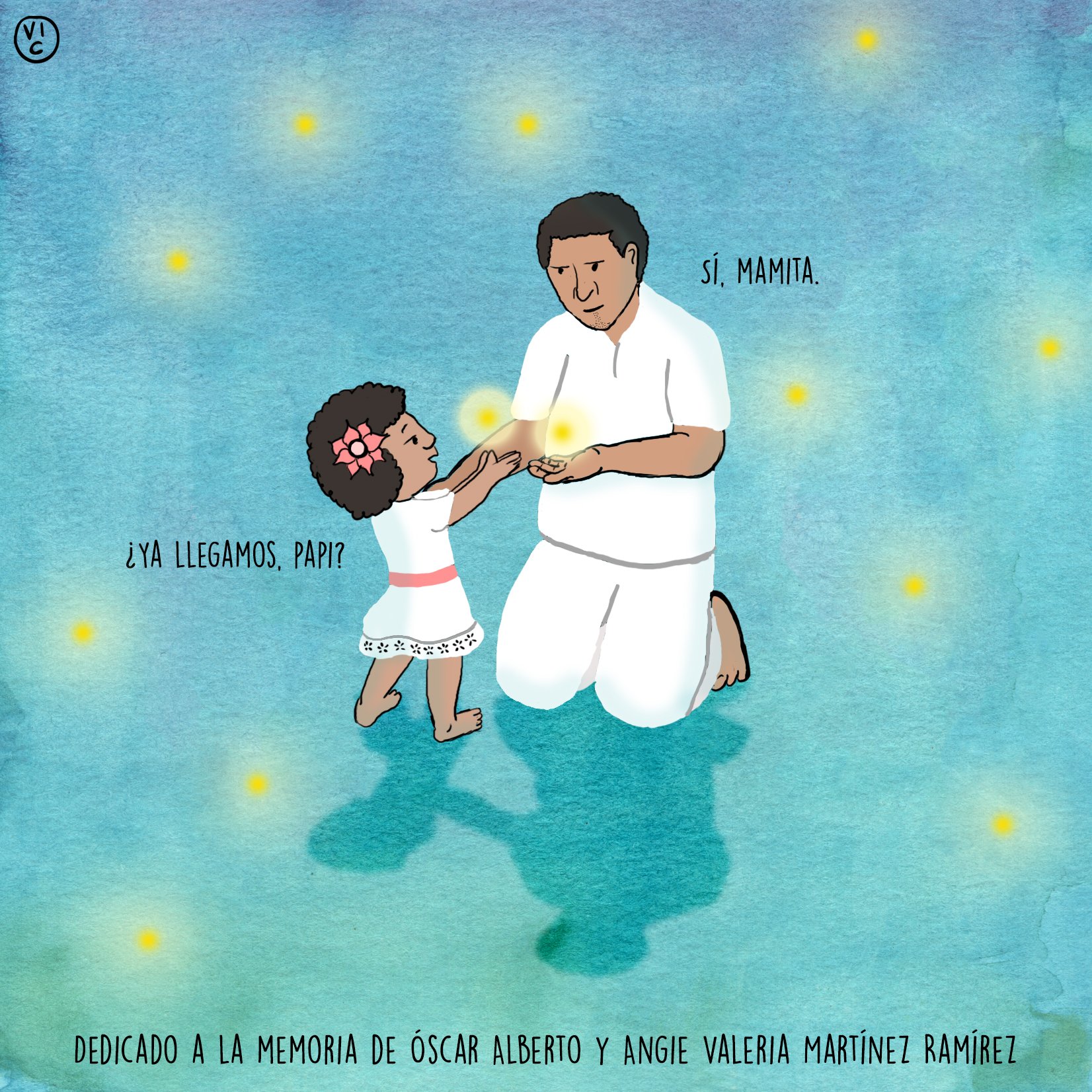
An Alternate History of El Salvador and Perhaps the World (Rio Grande) - This is a wishful, sweet rendition that transforms a site of trauma (the Rio Grande) into a river parents play in with their children. This nods to the death of Valeria, a young Salvadoran girl who died face down in the water with her father. I want to point to Dichos de un Bichos’ portrait of the daughter and father, which many Salvadorans found moving, in no small part because it centered on love. Weirdly enough, Reyes Jr.’s attempt to tell this story centers the river more than it does the love between families. The fixation of the river here feels very Mexican, especially considering how much longer and more dramatic the Central American migration story is. I respect Reyes Jr,’s attempts to heal this wound though. 

Overall, I was surprised by the fanfare and disappointed that a writer with such promise and given the privilege of attending Iowa would put this out at this stage. 2 out of 5.

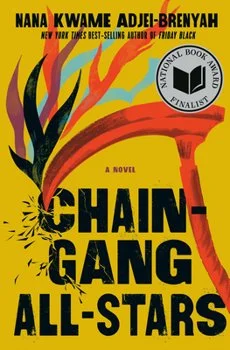
Chain-Gang All-Stars / Nana Kwame Adjei-Brenyah / 2023

Chain-Gang All-Stars / Nana Kwame Adjei-Brenyah / 2023 

Absolutely incredible. In Chain-Gangs All-Stars, Adjei-Brenyah imagines a world where the US prison system legalizes gladiator fights as a sport, a future at once unbelievably dystopian yet utterly imaginable given the trajectory of our nation. Adje-Brenyah interlaces the novel with non-fiction, journalistic accounts contextualizing the real life inspiration for certain scenes: the relationship between the immigration detention centers and the prison system, for example. Told from an ambitious range of perspectives, Adjei-Brenyah helps us understand both how humans can contort themselves to justify these injustices, as well as how they would survive them. Talking about this book usually leaves me blubbering, just saying words like incredible and genius. 5/5  

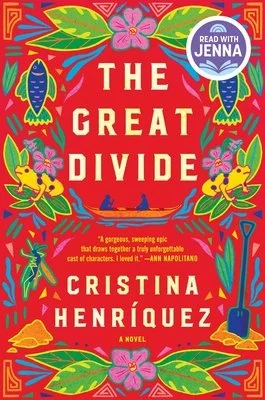
The Great Divide / Cristina Henriquez / 2024

The Great Divide / Cristina Henriquez / 2024

The Great Divide is a sweeping novel on the building of the Panama Canal. It tracks a fisherman and his estranged son who is building the canal against his wishes, a woman fighting against the displacement of her community, a Yankee doctor fighting malaria and the adolescent from Barbados who works as his help, as well as a slave driving Yankee working men to death in the canal. The novel opens gently and builds steadily. Before you know it, you’re enrapt in the drama of characters' lives, surprised by their various connections, and all under the steady hand of the author, who writes with a very clean craft that follows the rules of the genre without stifling any of the magic or inspiration. I read the book as a way of learning more about Central American history while touching grass instead of reading yet another lost in the sauce history book. It fulfilled that purpose and then some. 4.5/5 

Roza tumba quema / Claudia Hernandez / 2018

Roza tumba quema / Claudia Hernandez / 2018

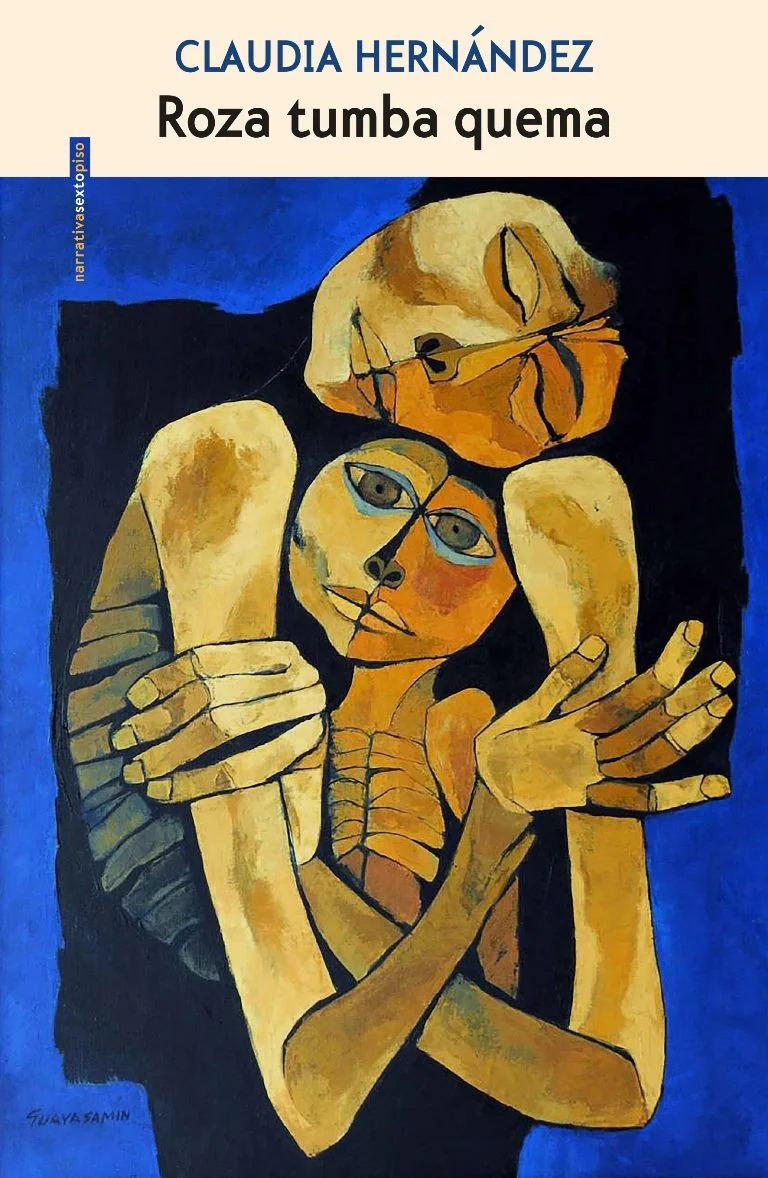
With Roza tumba quema and El Verbo J under her belt, Hernandez is perhaps the Salvadoran novelist who has best captured the pain and aftermath of the Salvadoran Civil War. Roza tumba quema follows a woman, criss-crossing through different eras of her life: as a guerrillera, as a mother fundraising for her daughter’s education, as a mother searching for her long lost daughter, and more. It is told in the dizzying narrative style of Hernandez which forces readers to reconstruct the context as she reads. I trust-fell into the style, sometimes losing track of who I was reading about when, but piecing it together, and the painful attention this takes, does something to the sentiment. Hernandez likes to leave readers unsteady, perhaps to avoid an easy sentimentalization, perhaps to give them a taste of the distress her characters face. In either case, it does little to hamper my sense of awe, gratitude, and desire to reflect over the lifetime Hernandez covers in this work. She writes the novels many others wished they were capable of writing with such finesse and grace. That is, novels that tell the story of an entire people, an era, with urgency and insights that resists simplistic readings of history. 5/5


Mumbo gumbo / Ishmael Reed / 1972

Mumbo gumbo / Ishmael Reed / 1972

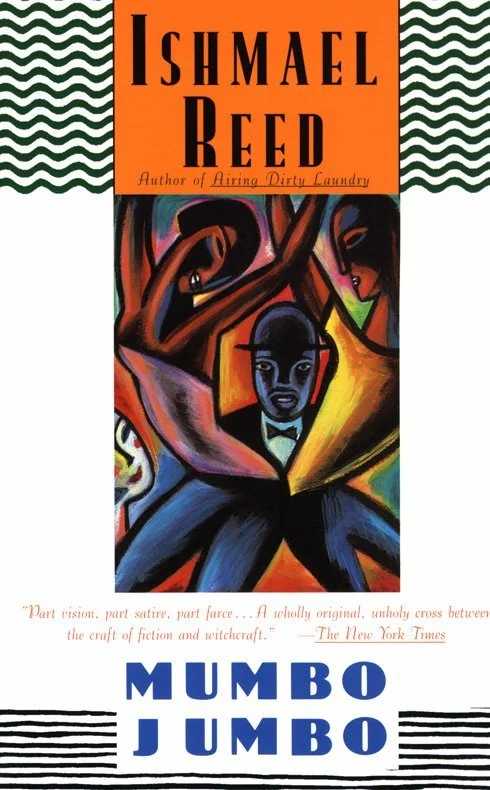
I’ve been wanting to read this book for years and I’m shook by its aliveness. Full of Black humor, Reed operates in the cynical, satirical mode that reminds me of Paul Beatty. Mumbo Jumbo follows a group of Illuminati elites as they try to take down the emerging Black intelligentsia, operating with a mix of political know-how and ancient magic and infecting the populace with a dancing epidemic--also known as jazz. Mumbo Jumbo creates its own formal rules, writing in sometimes brief chapters reminiscent of prose poems, and sometimes longer chapters. Either way, there is a jazz, a riff through socially complex interactions with a sharp political insight. I want to teach this book on a course on Black Intertextuality alongside The White Boy Shuffle by Paul Beatty and Erasure by Percival Everett. 5/5

Our Share of Night / Mariana Enriquez, trans. Megan McDowell / 2023 

Our Share of Night / Mariana Enriquez, trans. Megan McDowell / 2023 

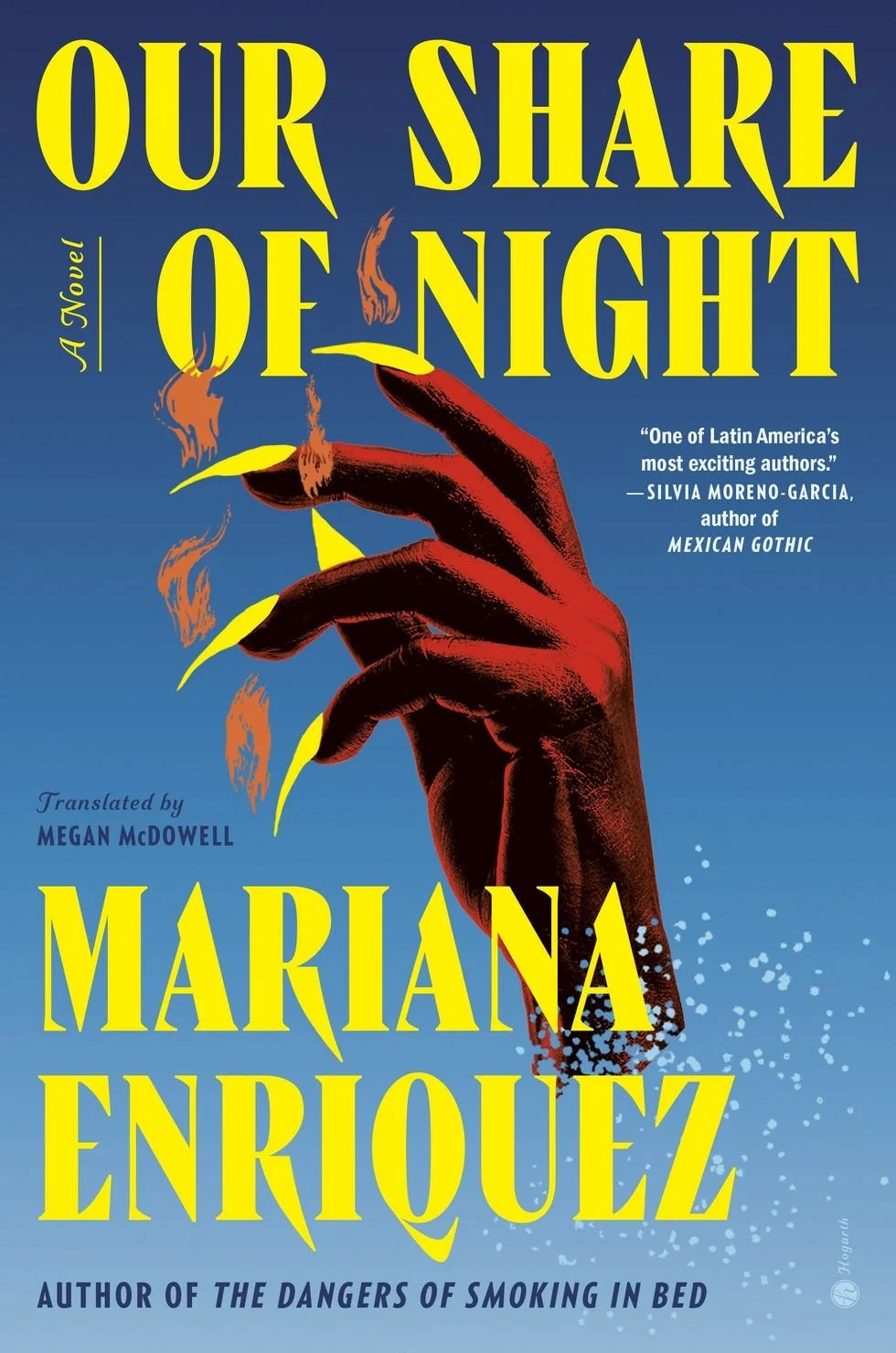
I picked up Our Share of Night because it combined my interests in erotica, horror, and Latin American literature. The novel did not disappoint on any of the counts. Enriquez is a master at capturing the historical, emotional and political zeitgeist of distinct cultural eras in history, both in Latin America and Europe, including rock and roll scenes, occult movements, and more. The magical oligarchy Enriquez invents is full of just enough intrigue, mystery and logic to drag the reader through horrifying scenes with an unsettled and confused, but fully invested. This is also done with master-level character work. How could one not feel for Gaspar, a young warlock whose inherited diabolical powers and is being hunted by his cruel murderous oligarchic grandparents to harness his powers? He’s a thousand times more compelling, developed, and realistic than Harry Potter. Every turn of the plot manages confuse, surprise, move, and intrigue. There is some questionable navigation of race that merits more exploration, but a closer inspection might reveal something more complicated and useful, even if not wholly unproblematic. 5/5. 

The Dangers of Smoking in Bed / Mariana Enriquez, trans. Megan McDowell / 2021

The Dangers of Smoking in Bed / Mariana Enriquez, trans. Megan McDowell / 2021

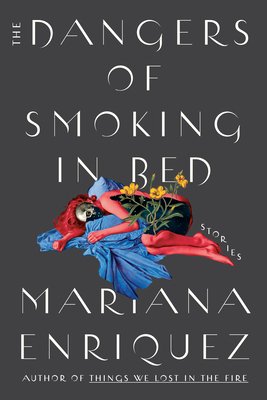
While generally well written, these short stories don’t have the same grip and vision as her novel does. It’s harder, it seems, to reach beyond a mere feeling of eeriness into something darker and more human in shorter work. Stories like “Angelita Unearthed” and “The Well” struggled to deliver a meaningful blow in my opinion. Enriquez’s racial dynamics are still complicated in ways that unsettle the reader. Still, I find some of those complicated portions the most interesting, as in “The Cart,” where a racialized and obnoxious vagrant is scared away from the neighborhood and leaves behind a curse. Other favorites include “Kids who come back,” “Where Are You, Dear Heart,” and “Meat,” each of which is just so fucking twisted and eery it’ll have you wiggling out of your seat. 3.5/5  

The Haunting of Hajji Hotak and Other Short Stories / Jamil Jon Kochai / 2022

Goddam this is a good short story collection. Much as There, there by Tommy Orange captured the range of heat and friction in the urban Native experience, Jamil Jon Kochai’s characters wrestle with the whole of Afghanistan’s history as the cultural impact of Islam and the ever-present traumas of war, migration, and imperialism put their whole weight on their lives. Its hard to describe the magical realism of the collection, because Kochai somehow pulled off incredibly hokey and heavy-handed metaphors; in fact, these exact metaphor managed to capture sometimes horrifying, sometimes darkly humorous, sometimes gorgeous elements of the Afghani experience that beating us over the head with relentless realist trauma just wouldn’t be able to do. There’s a story, for example, where a couple keeps receiving portions of their boy child’s dismembered body. The father goes on a goose chase looking for a police officer or an official willing to do anything. The mother, on the other hand, slowly sews their son back together. Such a dark premise sounds like an awful, heavy-handed undergrad idea in summary. Kochai made this spellbinding. There’s a story where a gamer, who loves MF DOOM (apparently a favorite for men of color short story writers like Kochai and Orange), ignores his family’s worried and troubled cries as he binge plays Metal Gear Solid V, which takes place in Afgani villages, much like where his father grew up. I am especially grateful I read this pulsating collection after reading Max Blumenthal’s The Management of Savagery, which included a rather clinical history of Afghanistan. There’s a way political argument can summarize atrocity after atrocity  in a couple of bloodless paragraphs, where a fiction writer can yield a gallon of blood from a single poetic phrase. The Haunting of Hajji Hotak and Other Stories burns with the fires of Afghanistan’s history and glides with the slick ice of a master fiction writer’s pen.    5/5

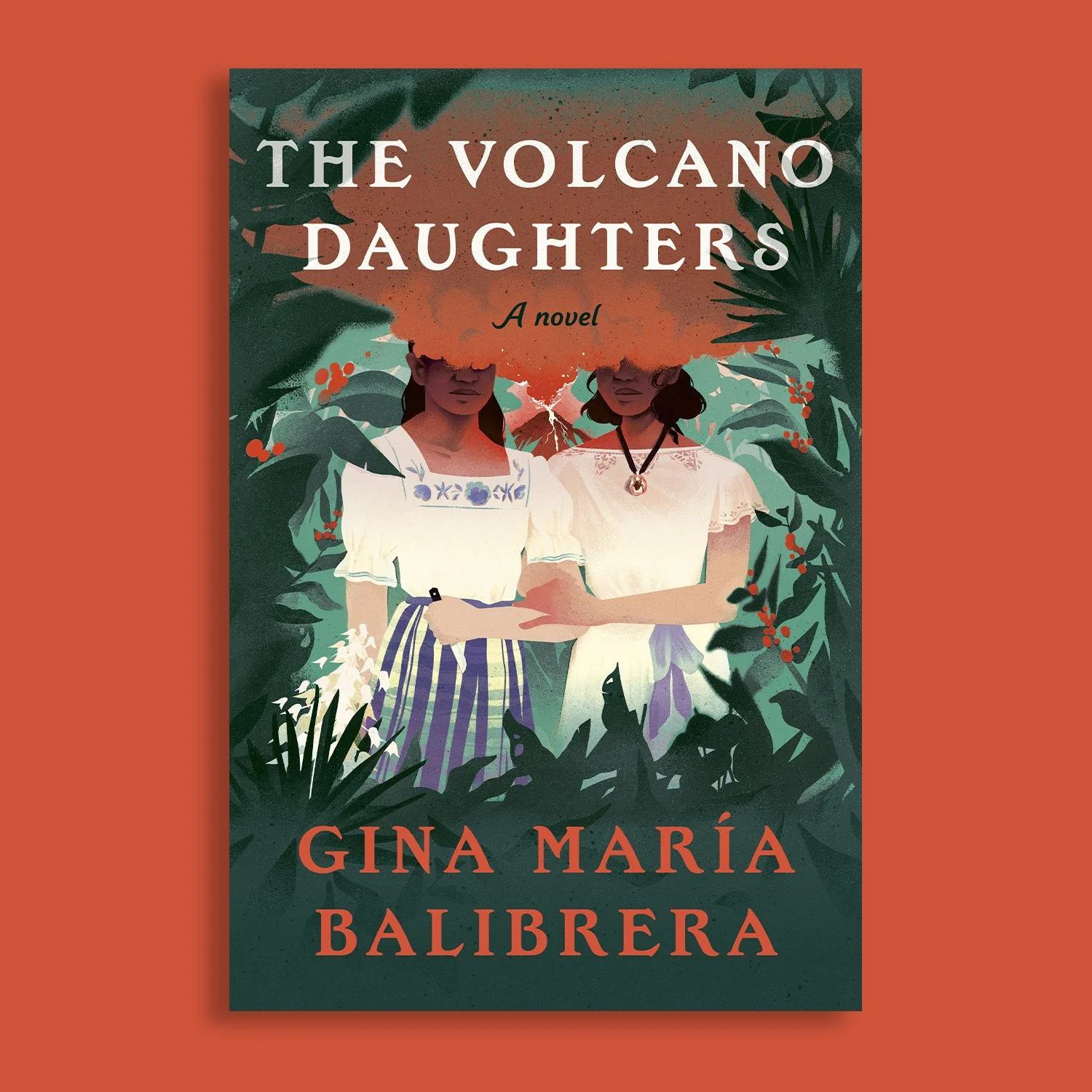
The Volcano Daughters / Gina María Balibrera / 2024

Following the trails of Consuelo and Graciela, two daughters kidnapped from Izalco, El Salvador, The Volcano Daughters is a loving and ambitious attempt to re-tell Salvadoran history for the Salvadoran diaspora. In many ways, I feel like this book was written specifically for me, as a Salvadoran poet interested in Central American history. It takes as its backdrop the single biggest moment of historic trauma for Salvadorans outside of la conquista, which is of course La Matanza of 1932 where between 10k to 50k (depends on what scholarship you subscribe to) mostly indigenous folks were murdered in a couple of weeks. The novel manages to encapsulate Salvadoran history from the memories of indigo plantations in the 19th century to about the 1950s. I am not exaggerating when I say this novel will probably save young Salvadorans a decade of serious study in the sheer quantity of allusions it gathers and arranges into a coherent narrative. 

The Volcano Daughters opens with a preamble of sorts, describing the importance and perspective of the story, quite reminiscent of Junot Diaz’s opening chapter to The Brief and Wondrous Life of Oscar Wao. Here, we become acquainted with one of Balibrera’s most genius storytelling devices, namely she uses the ghosts of young massacred girls, kin of our protagonists Consuelo and Graciela, as part interlocutor, part muse, in telling the story. The story is channeled explicitly through the author, Gina Balibrera, by these ghosts. The ghosts then interrupt the narrative, sometimes with shady commentary, other times contesting the story with their own biases, and sometimes even critiquing the author’s own language. This is a powerful and useful device that allows Balibrera the opportunity of dipping into debates about Salvadoran history and literature. 

The Volcano Daughters is peppered with allusions to literature, history, and scholarship by or about Salvadorans. A lot of these asides are astute and apt interventions, such as when the ghosts interrupt an allusion to Roque Dalton to point out that he had a sexual relationship with the underage daughter of a comrade, something that Salvadoran literati and academia have not grappled with seriously yet because it is really inconvenient to have a figure as important and beloved to our leftist history as Roque be guilty of such a heinous act. This is one of the many necessary feminist interventions to our understanding of our own history. 

Other times, however, I believe these asides are largely distracting. As much as I am curious about Balibrera’s criticisms of Joan Didion, her memoir Salvador literally falls outside the timeline of The Volcano Daughters. I’m ultimately only interested in the critique because I’m into Central American studies and even then, I’m not sure I got much out of that rant. If I wasn’t aware of Joan Didion, I wouldn’t have even picked up that it was her work being critiqued, as many of these allusions happen obliquely. Roque Dalton, for example, isn’t even mentioned by name. While one can argue that it’s up to the reader to do the research and study up to fully appreciate the work, I think putting this much of an onus is a tad ridiculous. As someone who has gone out of their way to study more Salvadoran history than most people I know in the diaspora, even I was sure I was missing out on crucial context for some of these asides, especially when it came to the conversations within the European art scene. These at times confusing allusions do, of course, present me with the opportunity to research and study more, but it definitely bogged down the narrative and wasn’t as effective at delivering such a critique as another forum or form may have been. 

There is a trend right now of powerful, headstrong, reactive Latinas in Latina literature right now, who respond surprisingly boldly in violent confrontations. I’m thinking of Betita in Land of Cranes who tries to fight against ICE officers as a nine-year-old. I’m thinking of Tia Tere in my own collection where she assaults a thief, as she did in real life, and later when I imagine her landing a punch against a military officer, which she didn’t do in real life. In The Volcano Daughters, for example, one of the ghosts punches a military officer that later massacres her and the family; later on, Graciela stabs the 1930s-40s equivalent of ICE in Hollywood before fleeing. The latter example, especially, felt not very well thought out narratively, requiring a deus ex machina where Graciela flees following the ghosts as butterflies, somehow doesn’t get caught despite being in front of a Hollywood filming crew, and disappears in the Bay Area. Of course, Latinas are strong and powerful, many do resist, sometimes violently, against their oppressors, and we deserve to see that represented. But I’m not always convinced by the characterization of these headstrong women. They feel a bit more like tropes, caricatures than trauma-informed portrayals of real people. In a similar vein, I struggled with the voice of the novel at times. The amount of puchica’s was heartwarming and familiar, sure, but I feel like the characters are sometimes too easy to caricaturize. My own family says puchica, but not that much. 

The story is propelled sometimes successfully, sometimes less so, by the drama of the era. Knowing La Matanza is coming in Salvador and the Nazis are coming in Europe creates some good narrative tension, but sometimes the question of why we were still following the characters through their lives lingered, especially as they meandered through their new lives. As a whole, The Volcano Daughters definitely succeeded in capturing the struggles of Salvadoran women in this era, as Graciela and Consuelo fumble through their trauma, romantic relationships, childbirth, racialized expectations of their behavior and careers as artists, etc. In this way, the novel succeeds dramatically and beautifully, even if it occasionally steers away from its focus.

All that said, I treasure this novel and look forward to gifting it to my loved ones, teaching it in a course one day, and otherwise uplifting it.

4 out of 5. 

The Town of Babylon / Alejandro Varela / 2022

The Town of Babylon / Alejandro Varela / 2022

I read this because of the suggestion of a Salvadoran literary scholar, and I regret every second I spent with this book. Within the first pages, a queer latinx man decides to go to his 20-year high school reunion, practically ensuring I would share no common ground with a character I was ostensibly supposed to find relatable. The character shares a myriad of lukewarm political and cultural opinions of an emotionally stunted man of color with little insight to offer. One of my friend’s peers said of this book: Only a man could write a coming-of-age novel at the age of 40. I couldn’t agree more. 1/5  

Promise / Rachel Eliza Griffiths / 2023

Promise / Rachel Eliza Griffiths / 2023

I read Promise with To Kill a Mockingbird in my head. Both are written from the perspective of a girl in the Jim Crow South, struggling to understand the social complexities of violence as racially charged incidents embroil their hometowns. What Rachel Eliza Griffiths manages to capture, however, is infinitely more soulful, weathered, and gritty. 

Promise opens with a tricky scene where three young girls, two Black sisters and one white friend, explore one another’s vulvas in a non-sexual manner--a classic I’ll-show-you-mine-if-you-show-me-yours--. The reader is immediately thrust into a world where the intricacies of race, gender, and queerness can be traced through their reactions. 

Promise is a coming-of-age story of these three girls as their dreams collide against the barriers erected by a society that hates women. As such, Griffiths doesn’t sidestep the humanity of any of them. This is particularly impressive in the case of the white girl Ruby, who eventually lashes out with slurs and worse as her friendship with the two sisters devolves. The reader witnesses how Ruby’s unstable family life damaged her sense of self and the way white society and teachers preyed on her vulnerabilities. Ruby’s class background and shattered home is in stark contrast to the Kindred sisters’, who come from a strong Black family with an educated father. Griffiths narrates the process of Ruby slowly accepting the racial bribe through her class ascendency, rising from her ragged clothes to clothes purchased with stolen money to ribbons gifted to her by her predatory female teacher and mentor. Griffiths narrates--through the Black sisters at times--how Ruby was essentially bought and purchased, commodified by her white teachers and family, in painful detail. This close attention to Ruby is one of the novel’s greatest strengths, an immeasurable act of love to what easily could have been a cliched villainous character and an act that illuminated how gender, race, and class collide to hurt and manipulate people like Ruby. 

The story of the Kindreds, on the other hand, tells a story Black folks tell often: the story of what it meant to survive in the Jim Crow south. It’s a difficult story to tell for a variety of reasons: the intergenerational trauma, the politics behind any telling, the cliches of the genre. Griffiths somehow managed to tell it in a way that felt fresh to me. She puts the reader alongside Ezra and Cinthy, the two young Black sisters, as they resist and stumble their way through their racist school system and society and watch an emerging civil rights movement brew from afar. I especially cherish the dialogue between older generations and these two young girls as elders tried to guide them through a survival that did not compromise their dignity but would keep them safe from racial violence and terror. The sisters and their family survive and lose a lot. In the process, readers have the gift of witnessing the power of Black love, how it can even survive and nourish a family after a death. I love Promise for its willingness to show some elders’ sloppiness through survival and healing, as the last quarter of the novel introduces a vulgar grandmother who is called in to help during a time of crisis. The attention to the grandmother’s story, as well as Ruby’s for that matter, help Promise not fall into the traps of respectability politics. Ezra, in particular, is forced to engage with her own biases and learn to respect--with boundaries--a more rugged part of her literal history. 

Promise is so fully wrought and so magnificently intimate that I loved it against my will. I admit, I picked up the book out of loyalty to Rachel Eliza Griffiths and wasn’t sure if I needed another story from within this particular era of Black history. It quieted and instructed me, even when like Ezra and Cinthy, I wanted to rebel against it. So reader, sit your ass down and study it. Rachel has an important story to tell. 5/5

Everything for Everyone: An Oral History of the New York Commune, 2052-2072 / Eman Abdelhadi and M E O'Brien / 2023

Everything for Everyone: An Oral History of the New York Commune, 2052-2072 / Eman Abdelhadi and M E O'Brien / 2023

In Everything for Everyone, the authors take an ambitious and promising premise and fumble it. The novel frames itself as an oral history project of an era in human history where crucial aspects of capitalism finally collapse and critical advancements to communism finally occur. The subjects of the interview are selected to provide a window into how particular aspects of this new world came to be or were experienced by someone who lived them. 

As someone unread in many utopian novels, perhaps my eye is simply too critical of genre staples or a larger conversation happening. However, the conversations contained in the book irked me just as much as they managed to tickle my brain in an exciting direction. Take, for example, the interview with a scientist who worked on rehabilitating environments devastated by climate change. In the conversation, there is a mention of biotech, which refers to genetically engineered fauna and animals designed to restore balance to an ecosystem. What a lovely can of worms! What a great opportunity to explore the challenges of this Sci-Fi technology through a conversation, right? Wrong. They sidestep biotech in the interview, leaving me head-scratching about the missed opportunity and whether the authors are tempted by the idea of biotech, which to me at least feels obviously dangerous in key ways. 

At other times, Everything for Everyone just reads as naive. Take, for example, the chapter on the liberation of Palestine that centers on nonviolent action. The book was written and published before the Hamas attack on 10/7/23, so I can’t blame the authors too much, but I felt my trust in the authors dwindle repeatedly after similarly naive moves. Take, for example, the interview about birth work. In the commune, family structure dissolved and communal care arrangements for children were figured out. Technology had advanced to the point that AMAB people could carry a child, and supposedly many were rushing to experience that. While I’m sure some men would take on the burden, the starry eyed way this portion is narrated just felt silly. 

Maybe I’m a pessimist but the chapters I valued the most were the most traumatized and dark. There’s an interview with a Native American veteran who describes fighting in a nuclear war against Iran. There’s another with a survivor of a far-right Christian cult state compound. The characters and the situations felt truer. Even then though, the narratives skips through some of the most interesting parts: the veteran is so traumatized he can’t narrate coherently and the survivor of the cult is so traumatized they skip the most exciting bits of the escape. 

Everything for Everyone may be a cooler book to discuss than to read, but even so, I’m mostly just left with disappointment at how cool this book could’ve been in sturdier hands. 2.5/5. 

La Hacienda / Isabel Cañas / 2022

La Hacienda / Isabel Cañas / 2022

Complete with a spiteful upper caste sister-in-laws, a spooky house, and an unrequited relationship with a hot priest, The Hacienda offers a robust package when it comes to historical horror. Readers will find the history of the Mexican revolution and its racial politics seamlessly knitted into the drama of Beatriz’s marriage to Don Rodolfo Solórzano, her lifesaver turned nightmare. The mystery of what plagues the house is skillfully wrought, and the only real qualm I have with the novel is that it teased vampires without really ever delivering. Cañas skillfully flips between the perspectives of a mestizo priest and curandero and Beatriz, our upper-class protagonist, who must navigate colonial patriarchy and race politics to save herself and her family from poverty. The writing feels only one strike away from literary fiction, as opposed to genre fiction. 4 out 5. 

America is in the Heart / Carlos Bulosan / 1943

America is in the Heart / Carlos Bulosan / 1943

Written at breakneck speed, Bulosan narrates his life of poverty in the Philippines, his migration to the US, and his life of poverty and discrimination throughout the West. The narrator writes as if being chased in a way that reminds me Stephen Crane or Charles Dickens’ realism, except that in Bulosan this realism doesn’t feel voyeuristic. It’s actually lived and vomited from his gut. The voice reads not like a sensationalist journalist account of poverty, but of an aspiring young author who hasn’t found distance from his own pain because he never had stability to fully process. Even so, what Bulosan manages to capture with softness and tenderness is incredible. The amount of violence and cruelty intrinsic to Asian and immigrant life in this time period are crushing to read, whether Bulosan in narrating the misogynistic marital rituals of his hometown or describing racial terror he sometimes failed to flee with his comrades. 

America is in the Heart also narrates one generation’s communist dreams and it was insightful to hear how consciousness grew in Bulosan and the ways it was subsequently crushed by state actors. Throughout the years, I’ve realized that so much of the canon of color’s literary tradition is left-wing in a way that isn’t talked about in academia and unknown in many radical literary spaces. I prize this communist literature, including Bulosan, as part of a tradition that has been repressed in the US, as part of a tradition that I identify with. 

America is in the Heart ends with a romantic love letter to America. Bulosan, for some reason, could never abandon its promise. It read to me as Stockholm Syndrome, as a Sunken Costs fallacy, but I imagine that fans of the American Dream will find a flag to wave in its closing paragraphs. The closing paragraphs. hits the same ache as “My Man” by Billie Holiday for me. I mourn Bulosan’s tragic and stupid love for a country that will never love him back. I wish him a better dream. 4.8/5 

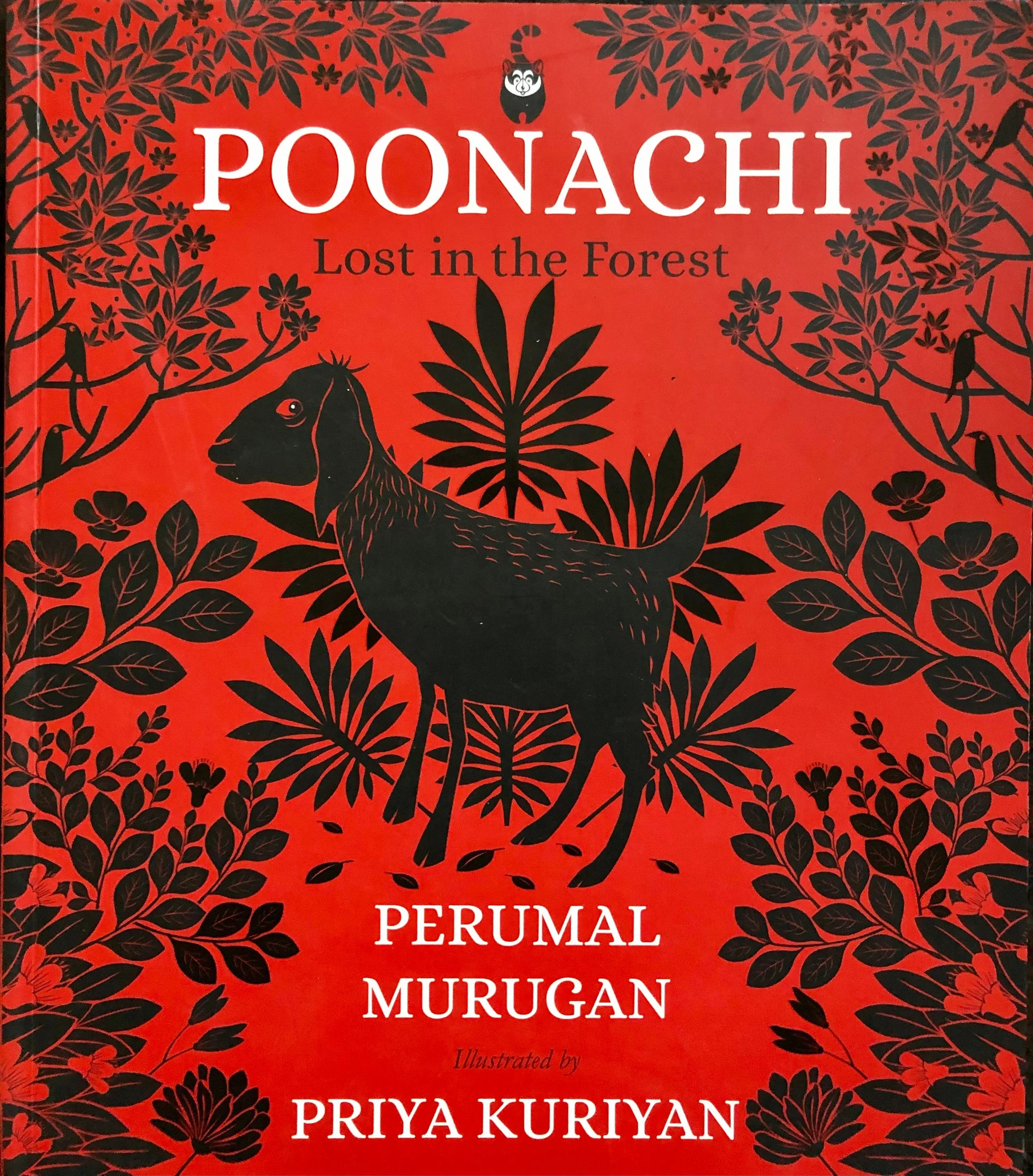
Poonachi / Perumal Murugan / 2016

Poonachi / Perumal Murugan / 2016

Poonachi tells the story of the ordinary life of an extraordinary goat capable of very large litters and delivered to a poor family by a giant. While the plot points are hardly three stuff of high drama, the novel captivates through its poignant description of Poonachi's feeling and its brutally honest and dystopic portrayal of life in rural India. This goat is literally the most human character I've read in years. 5/5


Wandering Stars / Tommy Orange / 2024

Wandering Stars / Tommy Orange / 2024

Wandering Stars in many ways feels like a strategic recoil and reaction against the commercial success of its prequel There, There. The conversations about indigenous resilience, hope, and identity definitely got a bit romantic, pitying and irksome in some corners, as readers leaned on it so heavily to attempt to understand urban Native experiences. 

Wandering Stars succeeds in a few ways: 1) its portrayal of the family's aftermath: the boy who once taught himself Native dance through YouTube videos now hates the trauma associated with his Native identity and turns to drugs.  The family's trauma after the mass shooting damaged not just their relationships to their Native roots but their ability to care for one another adequately. This aftermath is felt like a necessary counterpoint to the narrative catharsis of There, There. 2) There are poetic heights, especially in the wandering star metaphor, that truly soar just as high as the jawdropping debut. 

The novel fails for me in that it feels too sprawling without the same narrative coherence of There, There. At times, the voice felt didactic or hamfisted about woke topics, such as Native appropriation of Black culture via hip-hop and non-binary identity. This book has a much less glamorous view of survival and points to the devastating loss and sometimes embarrassingly pitiful attempts at revival as a critical part of their characters’ Native sense of self.  As someone whose indigenous heritage has been so present yet far removed, it's a bitter reflection, at once a hug and a jolt. I think Wandering Stars is a book white people will have a harder time celebrating and feeling good about, but is a crucial counterpoint. I struggled with the pessimism of Wandering Stars, which I think is more rightfully called realism, and continue to wrestle with my frustrations with it and whether I’m wrong.  3/5


Helpmeet / Naben Ruthnum / 2022

Helpmeet / Naben Ruthnum / 2022

What an incredible feat of feminist and disability horror.  We follow a wife as she cares for her diseased and dying husband. The disease is mysterious and horrifying as it dries out portions of his body until they crumble off. Less than 20 pages deep a nose and penis crumble off so be ready for some terrifying body horror.  The richly emotional narrative spins off troubling questions about gender and caretaking, love and betrayals, and the ending is such a shocking and stirring reveal that had Anushka and I debating its implications passionately.  I was swept away and stunned. This is why I read horror.   5/5


The Black Vampyre: A Legend of St. Domingo / Uriah Derick D'Arcy / 1819

The Black Vampyre: A Legend of St. Domingo / Uriah Derick D'Arcy / 1819

I read this curious about what racial insights it might have about its era and as part of my exploration of horror. It's the first vampire story from the Americas. It's mostly a tale of racial fetishism, action-packed scandal, all at a breakneck speed.  Hardly any time is spent exploring the emotional weight of the jerky narrative, which are to its credit quite saucy and eyebrow squirming.  It feels bizarrely contemporary, even with its outdated language.  Definitely only an interesting read for hobbyists and scholars.  1.5/5